Blogs

Why Seeking Help in Business Isn’t a Sign of Failure

There comes a point when trying harder simply isn’t enough.

That’s exactly where we found ourselves with Leo.

When he first came to us, we threw ourselves into helping him.

We watched videos.

We read books.

We listened to podcasts.

We spoke to other dog owners.

We tried different techniques.

Some things helped.

Some made no difference.

Some accidentally made things worse.

Like many people, my instinct was to solve the problem myself.

After all, that’s what capable people do… isn’t it?

Eventually, I realised something important.

It was a bit like learning to listen to your body – the signs had been there for a while, but I was so focused on trying to fix the problem that I wasn’t really noticing them.

I wasn’t struggling because I wasn’t trying hard enough.

I was struggling because I didn’t yet have the knowledge or experience to understand why Leo behaved the way he did.

That’s when we contacted a veterinary behaviourist.

Not because we’d failed.

Because we wanted to give Leo the very best chance possible.

Sometimes Experience Matters More Than Effort

Working with a behaviourist wasn’t a magic fix.

There wasn’t one session where everything suddenly changed.

Instead, we learnt.

We began to understand his triggers.

We recognised what wasn’t helping.

We adjusted our routines.

Perhaps most importantly, we learnt to slow down and observe before reacting.

That lesson has stayed with me far beyond dog training. Sometimes the answer isn’t to do more; it’s to understand more first. That’s something I explore further in my blog about Leo – Take Time to Assess a Situation.

Only then did Leo begin to change too.

The Same Thing Happens in Business

I see exactly the same thing in business.

There are countless things we can do ourselves.

Build a website.

Manage the bookkeeping.

Design graphics.

Write social media posts.

Create systems.

Learn marketing.

Some people genuinely enjoy all of those things.

Many don’t.

The challenge is that we often spend weeks, months or even years trying to solve a problem that someone with the right experience could help us understand in a fraction of the time.

Seeking help in business isn’t about finding someone to do everything for you.

It’s about recognising when someone else’s knowledge can help you move forwards more quickly, avoid costly mistakes or simply give you a different perspective.

Asking for Help Isn’t a Weakness

One of the biggest misconceptions in business is that asking for help somehow means you’re less capable.

I think the opposite is true.

Confident business owners know what they’re good at.

They also know what they’re not.

That’s why they surround themselves with people who can fill the gaps.

Sometimes that support is practical.

Sometimes it’s accountability.

Sometimes it’s someone asking the difficult questions you’ve been avoiding.

Sometimes it’s simply having someone to push you when you’ve convinced yourself you can’t take the next step.

Nobody succeeds entirely on their own.

Different Situations Need Different Skills

Another lesson Leo taught me is that experience doesn’t always transfer as easily as we think.

Someone can be an excellent dog owner and still need help with a rescue dog who has experienced trauma.

It’s no different to business.

Just because you’ve successfully managed one challenge doesn’t automatically mean you’ll know how to tackle the next.

It’s a little like asking whether swimming in a pool, in a lake or in the sea is really the same thing.

The basic skill may be identical.

The environment changes everything.

The conditions are different.

The risks are different.

And what worked perfectly before may no longer be enough.

Recognising that isn’t failure.

It’s wisdom.

Staying True to Yourself

Ironically, seeking help in business doesn’t make your business any less authentic.

In fact, it often makes it more authentic.

When you stop trying to become an expert in everything, you have more time and energy to focus on the things that genuinely make your business yours.

That’s how your customers know your business truly came from you.

Not because you’ve done absolutely everything yourself, but because the parts that matter most still reflect who you are, your values and the experience you want your customers to have.

The Lesson Leo Taught Me

Leo still isn’t the dog we imagined we’d have.

He’s something much better.

He’s taught us patience.

He’s taught us perspective.

And perhaps most importantly, he’s taught us that asking for expert help isn’t admitting defeat.

It’s giving yourself—and those who depend on you—the very best opportunity to succeed.

The same is true in business.

Sometimes the bravest thing you can do isn’t trying harder.

It’s recognising you don’t have to do it alone.

Ready to make your business work your way?

If this article has sparked an idea, highlighted a challenge, or simply made you stop and think, let’s have a chat. I offer a free, no-obligation discovery call where we can explore what’s working well, what’s getting in your way, and whether I can help you save time and create systems that fit the way you work.

👉 Book your free discovery call here: https://tidycal.com/3zd5zj1/blog-discovery-call-clone20250506083047

How Do Your Customers Know It Truly Came From You?

As business owners, we spend a lot of time trying to stand out.

We work on our branding.

We choose colours.

We create logos.

We build websites.

We design business cards.

But sometimes the thing that makes us most recognisable isn’t any of those things.

It’s consistency.

How do your customers know it came from you? Often it’s the consistency of your actions, communication and personality rather than your logo alone.

It’s the small details that become unmistakably yours.

The Christmas Card Test

A few years ago, I received a Christmas card that immediately made me smile.

Not because of who had signed it.

Not because of what it said.

But because I knew exactly who it was from before I even opened it.

The colours were distinctive.

The style was familiar.

It looked like them.

Their personality had become part of their branding.

That moment stuck with me because it demonstrated something powerful.

The strongest brands don’t need to announce themselves.

People recognise them instinctively. Just as everyone interprets the same thing differently, people also notice and remember different aspects of a brand.

Recognition Comes From Repetition

This is often how your customers know it came from you, even when your name isn’t immediately visible.

Most people assume branding is about creating something unique.

In reality, branding is often about being consistently you.

The colours you use.

The language you choose.

The way you communicate.

The quality people expect.

The experience clients receive.

Over time, those things create familiarity.

And familiarity creates trust. Much like the idea that connection doesn’t mean communication every day, recognition is often built through consistent experiences rather than constant interaction.

When people repeatedly experience the same values, standards and personality, they begin to recognise your work without needing to see your name attached to it.

The Unfinished Projects We Remember

Another thing that prompted this reflection was looking at some unfinished colouring projects from last year.

They’d been put aside months ago.

Yet the moment I saw them again, I immediately remembered where I’d left off and what I wanted them to become.

Some ideas stay with us because they genuinely matter.

The same is true for businesses.

People remember the things that consistently leave an impression.

Not necessarily the loudest things.

Not necessarily the most expensive things.

The things that feel authentic.

What Makes You Recognisable?

Recognisable branded greeting card amongst plain envelopes showing how customers identify a business through consistency
The strongest brands are often recognised before a name, logo, or website is ever seen.

When considering how your customers know it came from you, think beyond visual branding and focus on the experience people associate with you.

Think about the businesses and people you remember most.

Often it isn’t their logo.

It’s something deeper.

For some people, it’s their humour.

For others, it’s their generosity.

For others, it’s their reliability.

For me, when I think of people in my own network, certain traits immediately spring to mind.

When I think of Sheena, I think of glittery stars.

When I think of Abbie, I think of free gifts.

When I think of Smile, I think of extra care and attention.

When I think of Bearskills, I think of practical grounding and resilience.

When I think of Matt Richardson, I think of his commitment to making an impact.

And when I think of Jody, I immediately picture her Advent Calendar.

Each of those things has become part of how I recognise them.

Not because they forced it.

Because they’ve shown up consistently enough that the connection happened naturally.

Your Brand Is More Than Your Logo

Many business owners spend a huge amount of energy trying to perfect their visual branding.

That’s important.

But visual branding is only one piece of the puzzle.

Your real brand is the experience people have when they interact with you.

It’s how quickly you respond.

How clearly you communicate.

How reliable you are.

How you solve problems.

How people feel after they’ve worked with you.

Those are often the things clients remember longest.

Can People Spot You Without Seeing Your Name?

Here’s a useful question to consider:

If somebody removed your logo, your business name and your website address, would people still recognise your work?

Would they recognise your tone of voice?

Your values?

Your personality?

Your approach?

If the answer is yes, you’re building something far stronger than a visual identity.

You’re building recognition.

And recognition is often what turns casual followers into loyal customers.

Final Thoughts

Understanding how your customers know it came from you can help shape a brand that feels authentic, memorable and trustworthy.

The businesses that stay in people’s minds rarely do so because they have the cleverest logo or the most polished graphics.

They stay in people’s minds because they’re consistently themselves.

Their values show through.

Their personality shows through.

Their approach shows through.

So rather than asking whether your branding is perfect, perhaps ask a different question:

If someone received something from me today, would they instantly know it came from me?

Because when the answer becomes yes, your brand is doing exactly what it should.

That’s often the moment you know your customers know it came from you, even before they see your name attached to it.

Ready to make your business work your way?

If this article has sparked an idea, highlighted a challenge, or simply made you stop and think, let’s have a chat. I offer a free, no-obligation discovery call where we can explore what’s working well, what’s getting in your way, and whether I can help you save time and create systems that fit the way you work.

👉 Book your free discovery call here: https://tidycal.com/3zd5zj1/blog-discovery-call-clone20250506083047

I’m a Dyslexic Enabler, Not a Copywriter

Every so often somebody describes me as a copywriter.

And whilst I understand why, it never quite feels right.

Because copy writing isn’t really what I do.

I’m a dyslexic enabler.

That may sound like a strange job title, but it’s probably closer to the truth.

The Assumption People Make

People often see the end result.

A blog.

A newsletter.

A podcast description.

A set of social media captions.

A polished piece of content.

And they naturally assume the writing is the main skill being sold.

But for me, the writing is often just the final stage.

The real value comes much earlier.

Helping Ideas Escape

One of the biggest challenges many business owners face isn’t writing.

It’s getting their knowledge out of their head in the first place.

They know their subject inside out.

They can explain it brilliantly in conversation.

They can answer questions with ease.

But when they sit in front of a blank screen, everything grinds to a halt.

That’s where I often come in.

Not because I’m the world’s greatest writer.

But because I’m good at helping people organise their thoughts.

Turning conversations into content.

Turning expertise into something other people can understand.

Turning a collection of ideas into a finished piece of work.

My Dyslexia Has Shaped How I Work

As somebody who is dyslexic, I’ve never approached communication in a traditional way.

I’ve spent years finding methods, systems and tools that help me organise information.

Because of that, I often spot something important.

Many people don’t actually need somebody to write for them.

They need somebody to help them untangle what they’re trying to say.

Once the structure is there, the words often become much easier.

The Difference Between Information and Communication

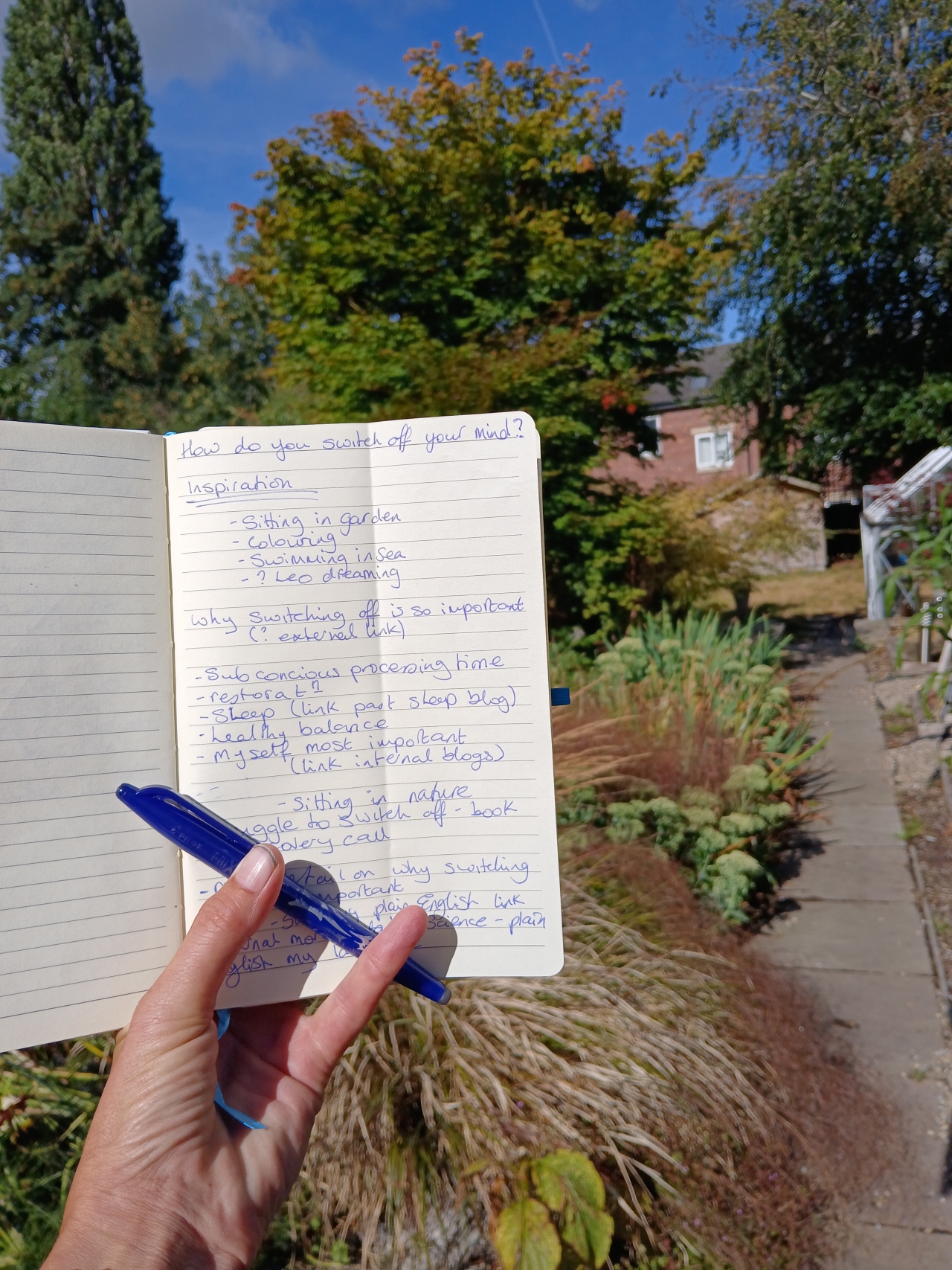
Handwritten notebook page showing brainstorming notes for a blog about being a dyslexic enabler rather than a copywriter
The first draft doesn’t start on a screen. It starts with ideas, conversations and scribbled notes that eventually become something useful.

Knowing something and communicating it are two very different skills.

A business owner may have decades of experience.

A coach may have transformed hundreds of lives.

An accountant may understand regulations inside out.

A podcast host may have incredible conversations.

But expertise doesn’t automatically become content.

Somewhere in the middle, it needs translating.

That’s the part I enjoy.

Being Yourself Matters

One of the reasons I don’t see myself as a traditional copywriter is that I rarely want clients to sound like me.

I want them to sound like themselves.

The goal isn’t to create content in my voice.

It’s to help their voice come through more clearly.

That’s why I spend so much time listening.

Listening to how people speak.

Listening to the stories they tell.

Listening to the phrases they naturally use.

The content becomes stronger because it’s theirs, not mine.

Knowing Your Limits

There’s another lesson hidden in this too.

Being good at something doesn’t mean you need to do everything.

Some people are brilliant presenters.

Some are fantastic speakers.

Some are amazing at generating ideas.

Some love writing.

Others don’t.

And that’s perfectly fine.

The goal isn’t to master every skill yourself.

The goal is to understand where your strengths are and find support for the things that aren’t.

Final Thoughts

I’m not offended when somebody calls me a copywriter.

I understand why they do.

After all, blogs, newsletters, podcast descriptions and captions are things I create regularly.

But the real value often starts much earlier.

Helping people organise their thinking.

Helping ideas leave notebooks and conversations.

Helping expertise become something useful to somebody else.

So if you ask me what I do, you’ll probably never hear me describe myself as a copywriter.

You’ll hear me describe myself as a dyslexic enabler.

And honestly, that feels much closer to the truth.

Ready to make your business work your way?

If this article has sparked an idea, highlighted a challenge, or simply made you stop and think, let’s have a chat. I offer a free, no-obligation discovery call where we can explore what’s working well, what’s getting in your way, and whether I can help you save time and create systems that fit the way you work.

👉 Book your free discovery call here: https://tidycal.com/3zd5zj1/blog-discovery-call-clone20250506083047

Everyone Interprets the Same Thing Differently

You’re standing by the hotel pool.

The sun is shining.

The loungers are lined up neatly.

And scattered across them are towels.

Somebody has been up early.

Very early.

The interesting thing isn’t that the towels are there.

It’s how differently people interpret what they mean.

One person sees a towel and thinks:

“That’s fine. They’ve saved their seat.”

Another person looks at exactly the same towel and thinks:

“That’s not saving a seat. That’s claiming one.”

Same towel.

Same sunbed.

Same situation.

Completely different interpretation.

Everyone interprets the same thing differently, and that simple reality affects far more business conversations than we realise.

And it got me thinking about how often this happens in business.

We Rarely See Things Exactly As They Are

The reason everyone interprets the same thing differently is that we all view situations through our own experiences, beliefs and expectations.

Most of us assume we’re looking at facts.

In reality, we’re often looking at facts through our own experiences, values and beliefs.

What seems obvious to one person can look completely different to somebody else.

The towel on the sunbed isn’t really the issue.

The interpretation is.

One person sees planning.

Another sees selfishness.

One sees organisation.

Another sees unfairness.

Neither person is necessarily looking at a different situation.

They’re simply viewing it through a different lens.

Business Is Full of Towels on Sunbeds

Business owners encounter this every day.

You send a short email because you’re busy.

One person reads it as efficient.

Another reads it as abrupt.

You delay replying because you’re gathering information.

One person sees professionalism.

Another sees poor communication.

You decline an opportunity because your diary is already full.

One person sees strong boundaries.

Another sees a lack of interest.

The action is the same.

The interpretation changes.

Pair of glasses with different coloured lenses showing the same object from two different perspectives

Why Misunderstandings Happen

When everyone interprets the same thing differently, misunderstandings become almost inevitable unless we stop to check our assumptions.

Most disagreements don’t start because somebody deliberately set out to cause a problem.

They start because people make assumptions.

We fill in gaps.

We attach meaning.

We tell ourselves stories about what something means.

Often without checking whether our interpretation is correct.

The more experience we have, the more likely we are to do it.

Because our brains like shortcuts.

They help us make quick decisions.

But they can also lead us to completely the wrong conclusion.

The Danger of Assuming Everyone Thinks Like You

One of the biggest mistakes business owners make is assuming everybody interprets situations the same way they do.

They don’t.

Your clients won’t.

Your suppliers won’t.

Your team won’t.

Your networking contacts won’t.

Your family certainly won’t.

What feels perfectly clear in your head may not be clear to anyone else.

And what feels completely obvious to somebody else may never have crossed your mind.

That’s why good communication matters so much.

Not because it guarantees everyone will agree.

But because it reduces the chance of misunderstanding.

Curiosity Beats Assumption

When something frustrates us, it’s tempting to decide what it means.

The better option is often to ask.

To be curious.

To gather more information before jumping to conclusions.

The person who placed the towel on the sunbed may have perfectly reasonable reasons for doing so.

Or they may not.

But until we know, we’re only guessing.

The same applies in business.

Before assuming somebody is ignoring you, ask.

Before assuming somebody isn’t interested, ask.

Before assuming somebody is difficult, ask.

Questions usually provide better answers than assumptions.

Final Thoughts

Understanding that everyone interprets the same thing differently has helped me become more curious and less certain when communication feels unclear.

The longer I run a business, the more I realise that many disagreements aren’t caused by bad intentions.

They’re caused by different interpretations.

Two people can witness exactly the same event and walk away with completely different conclusions.

The towel is still just a towel.

The situation is still the same.

What changes is the meaning we attach to it.

So the next time you find yourself feeling certain about what somebody meant, pause for a moment.

And ask yourself:

“Am I reacting to what happened, or to my interpretation of what happened?”

Because those aren’t always the same thing.

After all, everyone interprets the same thing differently, even when they’re looking at exactly the same facts. 🐿️

Ready to make your business work your way?

If this article has sparked an idea, highlighted a challenge, or simply made you stop and think, let’s have a chat. I offer a free, no-obligation discovery call where we can explore what’s working well, what’s getting in your way, and whether I can help you save time and create systems that fit the way you work.

👉 Book your free discovery call here: https://tidycal.com/3zd5zj1/blog-discovery-call-clone20250506083047

Is There a Right and a Wrong Way?

Is There a Right and a Wrong Way in Business? Finding What Works for You

As business owners, we spend a lot of time wondering whether there is a right and a wrong way in business.

The right way to market.

The right way to network.

The right way to manage our time.

The right way to train our teams.

The right way to grow our business.

But what if the question isn’t whether something is right or wrong?

What if the better question is whether it works for you?

Is there a right and a wrong way in business? Sometimes there is, but far more often the answer depends on the person, the situation, and the outcome they are trying to achieve.

Learning This Lesson the Hard Way

For a long time, I assumed there was a correct way to do almost everything.

If somebody else was successful, surely I should copy what they were doing.

If an expert recommended a system, surely I should follow it.

If everyone else seemed to be doing something one way, surely that was the right way.

The trouble is that life isn’t that simple.

People are different.

Businesses are different.

Circumstances are different.

What works brilliantly for one person may be completely unsuitable for somebody else.

I’ve seen this in my own life too. I tend to learn by throwing myself into something and figuring it out as I go. Tom often prefers to research first and understand the options before making a decision. Neither approach is automatically right or wrong — they’re simply different. The same applies in business. What matters isn’t whether someone else’s system works for them; it’s whether it works for you.

Different notebooks, pens and planning tools showing that people work in different ways
The best system isn’t the one everyone else uses. It’s the one that works for you.

The Dog Training Example

I’ve seen this with Leo.

Ask ten dog trainers how to solve a problem and you may receive ten different answers.

Some approaches suit one dog perfectly.

Others don’t.

Some methods fit the owner’s lifestyle.

Others don’t.

The goal isn’t to prove one trainer right and another wrong.

The goal is to find an approach that works for the dog and the owner standing in front of them.

Business is often exactly the same.

Advice Isn’t One-Size-Fits-All

This is where the question “is there a right and a wrong way in business?” becomes particularly relevant, because different approaches can produce equally successful results.

Business advice can be incredibly valuable.

But it should never replace thinking.

Someone might tell you to post on social media every day.

Someone else may recommend weekly content.

Another person may suggest avoiding social media altogether.

Who’s right?

Potentially all of them.

Potentially none of them.

The answer depends on your goals, your capacity, your audience and your priorities.

The Cost of Chasing the Perfect Method

Many business owners become stuck because they’re searching for certainty.

They spend months researching.

Comparing.

Learning.

Planning.

Waiting until they’re confident they’ve found the perfect approach.

But there often isn’t a perfect approach.

There is only the next sensible step.

Sometimes progress comes from trying something, learning from it, and adjusting as you go.

Different Doesn’t Mean Wrong

Understanding that there isn’t always a right and a wrong way in business can remove a huge amount of pressure and uncertainty.

One of the most useful lessons I’ve learned is that different and wrong are not the same thing.

Someone may organise their diary differently.

Run meetings differently.

Market differently.

Network differently.

Train differently.

Lead differently.

That doesn’t automatically make them wrong.

It simply means they’ve found an approach that works for them.

Consider Advice Carefully

Advice is precious.

Experience is valuable.

Learning from others can save enormous amounts of time and frustration.

But advice should be considered, not blindly followed.

Ask yourself:

  • Does this suit my situation?
  • Does this align with my values?
  • Does this fit my goals?
  • Do I have the capacity to do this well?
  • Will this genuinely help me move forwards?

If the answer is yes, great.

If not, it’s perfectly acceptable to take a different path.

Final Thoughts

When asking whether there is a right and a wrong way in business, it helps to separate ethical principles from personal preferences and working styles.

There are certainly wrong ways to do some things.

Dishonesty is wrong.

Treating people badly is wrong.

Breaking promises is wrong.

But beyond those fundamentals, many business decisions aren’t about right and wrong at all.

They’re about fit.

The best systems, processes and habits are often the ones that work consistently for you.

So before asking whether something is the right way, ask a different question:

“Is this the right way for me?”

Because that’s often the answer that matters most.

The most successful business owners often stop asking whether there is a right and a wrong way in business and start asking whether their chosen approach genuinely works for them.

Ready to make your business work your way?

If this article has sparked an idea, highlighted a challenge, or simply made you stop and think, let’s have a chat. I offer a free, no-obligation discovery call where we can explore what’s working well, what’s getting in your way, and whether I can help you save time and create systems that fit the way you work.

👉 Book your free discovery call here: https://tidycal.com/3zd5zj1/blog-discovery-call-clone20250506083047

When Is Sharing Not Caring?

We often hear the phrase “sharing is caring.”

Most of the time, that’s true.

Sharing knowledge helps people learn.

Sharing opportunities helps people grow.

Sharing experiences helps people avoid mistakes.

But sometimes, sharing isn’t caring at all.

Sometimes, despite the best intentions, sharing simply creates more work, more decisions, and more pressure for the person on the receiving end.

The Sicily Holiday That Wasn’t Really About Sicily

Recently, I found myself trying to organise a holiday.

Like many group decisions, accommodation options started appearing.

One suggestion became two.

Two became five.

Five became ten.

Everyone involved was trying to help.

Nobody was being difficult.

Nobody was trying to make things harder.

In fact, everyone was doing exactly the opposite.

They were sharing options because they cared.

The problem was that every new option created another decision.

Every link needed opening.

Every property needed comparing.

Every suggestion required thought and consideration.

Instead of getting closer to a decision, the decision was getting bigger.

Leo the rescue dog standing at patio doors deciding whether to go outside into the garden
Sometimes the hardest part isn’t finding more options—it’s choosing one.

The Hidden Cost of More Choices

We often assume that more options are better.

More information.

More possibilities.

More flexibility.

But every option comes with a hidden cost.

It requires time.

It requires attention.

It requires mental energy.

And all three are limited resources.

The more options somebody has to process, the more work you’ve unintentionally handed back to them.

This Happens in Business Too

This isn’t just about holidays.

It happens in business every day.

A business owner asks for a recommendation and receives twenty possibilities.

A client asks a simple question and receives a detailed list of every possible answer.

Someone asks for advice and ends up with so many suggestions they don’t know where to start.

The intention is usually generous.

The outcome is often overwhelm.

Sometimes what people need isn’t more information.

They need clarity.

Helping Isn’t Always About Adding More

When we’re trying to help, it’s easy to think our role is to contribute more.

Another idea.

Another suggestion.

Another option.

Another possibility.

But sometimes the most valuable thing we can do is reduce the choices.

Narrow the field.

Make a recommendation.

Help somebody move forwards.

Because progress rarely comes from having endless options.

Progress comes from making decisions.

Protecting Time and Energy

One thing I’ve become increasingly aware of is that every decision has a cost.

Not a financial cost.

A mental cost.

Decision-making takes energy.

Research takes energy.

Comparison takes energy.

If somebody is already busy, overwhelmed, or carrying a heavy workload, adding more options may not be helping at all.

It may simply be creating another task they didn’t need.

A Better Question

Before sharing something, it can be helpful to ask:

“Am I making this easier or harder?”

Sometimes the answer is obvious.

Sometimes it isn’t.

But it’s a useful question to consider.

Because caring isn’t about how much information we provide.

It’s about whether the information genuinely helps.

Final Thoughts

Sharing can absolutely be caring.

But only when it serves the person receiving it.

Sometimes sharing knowledge is helpful.

Sometimes sharing opportunities is helpful.

Sometimes sharing experiences is helpful.

And sometimes the kindest thing we can do is stop searching for more options and support a decision that’s already good enough.

Because often what people need most isn’t another possibility.

It’s permission to move forwards.

Ready to make your business work your way?

If this article has sparked an idea, highlighted a challenge, or simply made you stop and think, let’s have a chat. I offer a free, no-obligation discovery call where we can explore what’s working well, what’s getting in your way, and whether I can help you save time and create systems that fit the way you work.

👉 Book your free discovery call here: https://tidycal.com/3zd5zj1/blog-discovery-call-clone20250506083047

Connection Doesn’t Mean Communication Every Day

One of the biggest myths in business is that staying connected means being in constant contact.

It doesn’t.

Many business owners fall into the trap of believing they need to reply immediately, check messages constantly, attend every conversation, and keep every communication channel active at all times.

The result?

A never-ending stream of notifications, interruptions, and distractions that leave very little time for meaningful work.

Being connected and communicating are not the same thing.

Vegetable garden showing different plants growing steadily through regular care and attention over time
Healthy growth doesn’t require constant checking — just consistent care.

The Pressure to Always Be Available

Modern technology has made it easier than ever to stay in touch.

Emails arrive instantly.

Messages appear on multiple platforms.

Social media notifications demand attention.

Video calls can be scheduled within minutes.

The expectation can quickly become that everyone should be available all the time.

But just because somebody can contact you instantly doesn’t mean they need an instant response.

Nor does it mean you are providing a better service by constantly interrupting yourself.

Constant Communication Has a Cost

Every interruption requires your brain to switch gears.

You stop what you are doing.

Read the message.

Process the request.

Decide whether to respond.

Then attempt to return to your original task.

Repeat that dozens of times throughout the day and it becomes difficult to make real progress on anything important.

Many business owners describe feeling busy all day but struggling to identify what they have actually achieved.

Often the culprit isn’t a lack of effort.

It’s too much communication.

Staying Connected Doesn’t Require Constant Contact

Think about the people who matter most in your life.

Friends.

Family.

Long-term clients.

Professional contacts.

You probably don’t communicate with all of them every single day.

Yet the connection still exists.

The relationship remains strong because it is built on trust, consistency, and mutual understanding rather than constant conversation.

The same principle applies in business.

A client doesn’t need daily updates if they know the work is progressing.

A networking contact doesn’t need weekly messages to remember who you are.

Relationships are strengthened by quality interactions, not simply quantity.

Communication Should Have a Purpose

Good communication solves problems.

Provides information.

Builds trust.

Creates clarity.

Poor communication often does the opposite.

It creates noise.

Not every email requires an immediate response.

Not every message requires a conversation.

Not every update needs a meeting.

Sometimes the most effective communication is waiting until you have something useful to say.

Create Space for Meaningful Work

If your day is filled entirely with responding to other people’s requests, there is very little room left for your own priorities.

That doesn’t mean becoming unresponsive.

It means creating healthy boundaries around your communication.

Checking emails at set times.

Turning off unnecessary notifications.

Scheduling focused work periods.

Allowing yourself time to think before responding.

These small changes can dramatically improve both productivity and wellbeing.

Connection Is About Relationships, Not Frequency

The strongest relationships are rarely built on constant communication.

They are built on trust.

Reliability.

Consistency.

And showing up when it matters.

You don’t need to communicate every day to stay connected.

Sometimes the best thing you can do is step away from the notifications, focus on the work that matters, and trust that genuine relationships can withstand a little silence.

Ready to make your business work your way?

If this article has sparked an idea, highlighted a challenge, or simply made you stop and think, let’s have a chat. I offer a free, no-obligation discovery call where we can explore what’s working well, what’s getting in your way, and whether I can help you save time and create systems that fit the way you work.

👉 Book your free discovery call here: https://tidycal.com/3zd5zj1/blog-discovery-call-clone20250506083047

Enough Is Enough When… Enough Is Enough

One of the challenges of self-employment is knowing when to stop.

Not when to give up.

Not when to lower your standards.

Not when to stop caring.

Simply when to recognise that something is good enough and it is time to move on.

Many business owners struggle with this because there is always one more thing that could be improved.

One more tweak.

One more edit.

One more check.

One more hour.

The problem is that if everything can always be improved, nothing ever feels finished.

But How Do You Know What Is Enough?

That is the difficult question.

Enough might be:

  • The situation
  • Your mindset
  • How you are feeling
  • Your gut instinct
  • Your health
  • Where you spend your time
  • Where you spend your money
  • Your activities
  • Your ambition
  • Your goals

The answer is different for every person and every situation.

What feels enough for one business owner may feel completely inadequate to another.

The danger comes when you become so focused on finding the perfect answer that you never make a decision at all.

The Cost of Constant Improvement

Perfection has a habit of disguising itself as productivity.

You convince yourself that you are working.

You are researching.

Checking.

Comparing.

Tweaking.

Refining.

Preparing.

But sometimes all that activity is simply delaying a decision.

A website sits unpublished because it is not quite ready.

A service never launches because there is still more work to do.

A proposal stays in drafts because it could be improved further.

Meanwhile, opportunities pass by while you are still trying to make things perfect.

Enough Is Often a Moving Target

What was enough six months ago may not be enough now.

That is normal.

Businesses evolve.

People grow.

Goals change.

The important thing is recognising that “enough” is not a fixed destination.

It is a decision.

A conscious choice to say:

“This is good enough for where I am today.”

You can always improve something later.

You cannot get back the time spent endlessly revisiting the same decision.

Black shepherd-type dog standing at patio doors looking out into the garden, representing reflection, decision-making, and knowing when to move forward.
Sometimes the hardest decision is recognising you’ve done enough and it’s time to move forward.

Learning to Trust Yourself

Sometimes the hardest part is trusting your own judgement.

Trusting that you have done enough research.

Written enough words.

Spent enough money.

Made enough improvements.

Prepared enough.

Because eventually there comes a point where no amount of extra checking will provide certainty.

You simply have to decide.

And that decision is often what moves your business forward.

A Question Worth Asking

If you are stuck on something right now, ask yourself:

Am I genuinely improving this, or am I delaying a decision because I am uncomfortable making it?

The answer may tell you everything you need to know.

Because sometimes enough really is enough.

And recognising that can be one of the most productive decisions you make.

Ready to make your business work your way?

If this article has sparked an idea, highlighted a challenge, or simply made you stop and think, let’s have a chat. I offer a free, no-obligation discovery call where we can explore what’s working well, what’s getting in your way, and whether I can help you save time and create systems that fit the way you work.

👉 Book your free discovery call here: https://tidycal.com/3zd5zj1/blog-discovery-call-clone20250506083047

When Does Flexibility Become a Problem in Business?

Flexibility is often seen as a positive in business.

Being accommodating.
Being easy to work with.
Giving people options.
Trying to make things convenient.

And in many cases, that flexibility is genuinely helpful.

But there comes a point where “being flexible” quietly starts creating stress, uncertainty, and extra mental load — especially when you’re self-employed.

Because flexibility isn’t always free.

Sometimes, it comes at the expense of your time, your energy, and your ability to properly focus on your own work.

Illustration of a black shepherd-type dog standing at a crossroads path with multiple direction choices, representing decision-making and flexibility in business.
Sometimes too many options create stress, delays, and hidden mental load.

The Hidden Work Behind “No Rush”

On the surface, offering someone multiple dates or saying “no problem, let me know what suits you” sounds simple enough.

But often, what sits underneath that is:

  • mentally holding diary space,
  • checking emails repeatedly,
  • waiting for confirmation,
  • keeping conversations half-open in your head,
  • delaying other plans “just in case”,
  • and carrying around a task that technically isn’t finished.

That’s the hidden workload people rarely talk about.

The practical task may only take five minutes.
The mental load can last days.

Too Many Options Can Create More Delays

Sometimes, flexibility actually makes decision-making harder.

When people are offered endless alternatives, no urgency, and no clear next step, decisions can drift.

You follow up.
You check in.
You offer another time.
Then another.
Then another.

Meanwhile, the task remains mentally active for you the entire time.

I recently found myself in exactly that position.

A customer was struggling to confirm a suitable call time, so I offered several alternatives and tried to be as accommodating as possible.

But 24 hours later, there was still no confirmed time.
No confirmed call link.
No clear decision.

And I realised something important:

I had spent far too much mental energy holding space for something that still hadn’t actually moved forward.

Self-Employment Makes This Harder

When you work for yourself, you don’t have separate departments managing schedules, follow-ups, or client communication.

You are the system.

Which means unresolved decisions don’t just sit in a shared inbox somewhere.

They sit with you.

They follow you into the next task.
The next meeting.
Sometimes even into your evenings and weekends.

That’s why boundaries around time and decision-making matter far more in self-employment than many people realise.

Because every open loop takes energy.

Flexibility Shouldn’t Mean Constant Availability

There’s a difference between being supportive and becoming permanently “on standby.”

And many self-employed people accidentally slide into that habit because they genuinely want to help.

We worry about appearing difficult.
We don’t want to inconvenience people.
We want to provide good service.

But constantly reshuffling yourself around uncertain decisions can quietly become exhausting.

Especially when it happens repeatedly.

Clarity Is Kinder Than Endless Flexibility

Ironically, people often make decisions faster when there’s structure.

A clear deadline.
A limited set of choices.
A simple next step.

Too much flexibility can sometimes create hesitation rather than progress.

And that’s something I’m learning to get better at myself.

Not by becoming rigid or difficult — but by recognising that my time and mental capacity matter too.

It Only Took Action When It Suited Me

Eventually, I stopped waiting for the situation to resolve itself.

I stopped mentally hovering over it.

And I simply took action at a time that worked for me.

The moment I did that, the mental weight lifted almost immediately.

Not because the task disappeared.
But because the uncertainty did.

Final Thoughts

Flexibility is valuable.

It helps businesses feel human.
It builds relationships.
It can create a much better customer experience.

But flexibility without boundaries can quietly become overwhelming.

Especially when you work for yourself.

Because your energy, focus, and mental capacity are resources too.

And protecting those resources isn’t selfish.

It’s part of running a sustainable business.

Ready to make your business work your way?

If this article has sparked an idea, highlighted a challenge, or simply made you stop and think, let’s have a chat. I offer a free, no-obligation discovery call where we can explore what’s working well, what’s getting in your way, and whether I can help you save time and create systems that fit the way you work.

👉 Book your free discovery call here: https://tidycal.com/3zd5zj1/blog-discovery-call-clone20250506083047

Self-Employment and the Importance of Planning for Yourself

There’s something I see far too often in self-employment.

Business owners planning around everyone else’s needs first.

Clients first.
Family first.
Messages first.
Other people’s emergencies first.

And somewhere at the bottom of the list?

Themselves.

The problem is, in self-employment, there usually isn’t another person quietly making sure you’re okay behind the scenes.

If you become overwhelmed, exhausted, ill, or completely burnt out, the business feels it too.

Productive garden with raised beds, plants and growing space representing sustainable growth and planning in self-employment.
Sustainable growth needs planning, space, and care — in business and in life.

That’s why planning for your own needs isn’t selfish. It’s responsible.

You Are the Engine Behind the Business

In employed roles, there are often systems, departments, policies, and colleagues helping carry the weight.

In small business?

A lot of the time, it’s just you.

You are:

  • the planner
  • the decision-maker
  • the customer service department
  • the admin
  • the marketing
  • the problem solver

Which means your wellbeing directly affects your business capacity.

If you constantly ignore your own needs, eventually something gives way.

Your Needs Deserve Space in the Plan

Planning shouldn’t only include:

  • deadlines
  • client work
  • networking
  • meetings
  • social media

It also needs to include:

  • rest
  • processing time
  • switch-off time
  • meals
  • movement
  • recovery
  • realistic workloads

Because a diary full of “productive” tasks means very little if you’re running yourself into the ground trying to complete them all.

Self-Employment Makes This Harder

One of the challenges with self-employment is that there’s rarely a clear stopping point.

There’s always:

  • another email
  • another idea
  • another opportunity
  • another unfinished task

And because of that, many business owners start treating their own needs as optional extras instead of essential maintenance.

But your needs are not the interruption to the business.

Ignoring them usually becomes the interruption later.

Success Becomes Harder Without Capacity

You cannot sustainably grow a business while permanently exhausted.

You cannot make good long-term decisions when your brain is overloaded.

And you certainly cannot support everybody else properly if you never allow yourself any breathing space.

Sometimes the most productive thing you can do is pause long enough to notice what you actually need.

Not what everybody else expects from you.

What you need.

Final Thoughts

Planning for your needs is important because you are not separate from your business.

Your energy matters.
Your capacity matters.
Your wellbeing matters.

And if you don’t make space for those things intentionally, the business will eventually force the issue for you.

A sustainable business is not built by endlessly sacrificing yourself to keep everything moving.

It’s built by creating systems, boundaries, and routines that allow both you and the business to keep functioning long term.

Ready to make your business work your way?

If this article has sparked an idea, highlighted a challenge, or simply made you stop and think, let’s have a chat. I offer a free, no-obligation discovery call where we can explore what’s working well, what’s getting in your way, and whether I can help you save time and create systems that fit the way you work.

👉 Book your free discovery call here: https://tidycal.com/3zd5zj1/blog-discovery-call-clone20250506083047