I’m a Dyslexic Enabler, Not a Copywriter

Every so often somebody describes me as a copywriter.

And whilst I understand why, it never quite feels right.

Because copy writing isn’t really what I do.

I’m a dyslexic enabler.

That may sound like a strange job title, but it’s probably closer to the truth.

The Assumption People Make

People often see the end result.

A blog.

A newsletter.

A podcast description.

A set of social media captions.

A polished piece of content.

And they naturally assume the writing is the main skill being sold.

But for me, the writing is often just the final stage.

The real value comes much earlier.

Helping Ideas Escape

One of the biggest challenges many business owners face isn’t writing.

It’s getting their knowledge out of their head in the first place.

They know their subject inside out.

They can explain it brilliantly in conversation.

They can answer questions with ease.

But when they sit in front of a blank screen, everything grinds to a halt.

That’s where I often come in.

Not because I’m the world’s greatest writer.

But because I’m good at helping people organise their thoughts.

Turning conversations into content.

Turning expertise into something other people can understand.

Turning a collection of ideas into a finished piece of work.

My Dyslexia Has Shaped How I Work

As somebody who is dyslexic, I’ve never approached communication in a traditional way.

I’ve spent years finding methods, systems and tools that help me organise information.

Because of that, I often spot something important.

Many people don’t actually need somebody to write for them.

They need somebody to help them untangle what they’re trying to say.

Once the structure is there, the words often become much easier.

The Difference Between Information and Communication
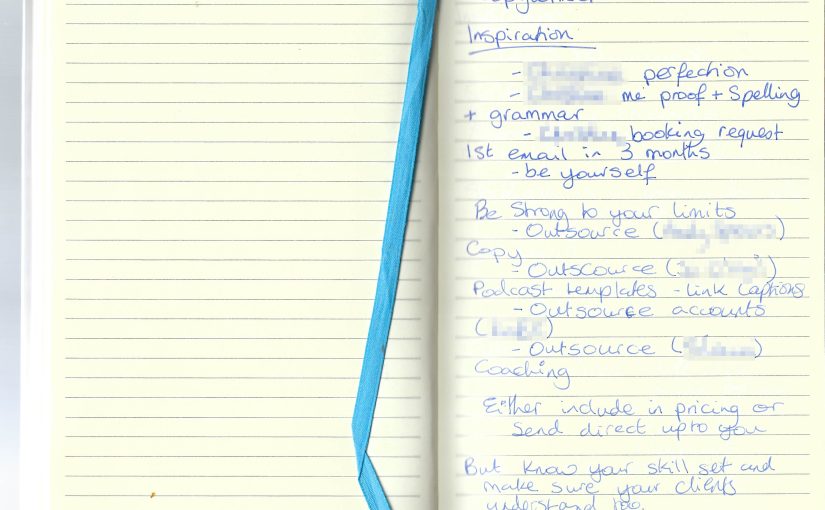
Handwritten notebook page showing brainstorming notes for a blog about being a dyslexic enabler rather than a copywriter
The first draft doesn’t start on a screen. It starts with ideas, conversations and scribbled notes that eventually become something useful.

Knowing something and communicating it are two very different skills.

A business owner may have decades of experience.

A coach may have transformed hundreds of lives.

An accountant may understand regulations inside out.

A podcast host may have incredible conversations.

But expertise doesn’t automatically become content.

Somewhere in the middle, it needs translating.

That’s the part I enjoy.

Being Yourself Matters

One of the reasons I don’t see myself as a traditional copywriter is that I rarely want clients to sound like me.

I want them to sound like themselves.

The goal isn’t to create content in my voice.

It’s to help their voice come through more clearly.

That’s why I spend so much time listening.

Listening to how people speak.

Listening to the stories they tell.

Listening to the phrases they naturally use.

The content becomes stronger because it’s theirs, not mine.

Knowing Your Limits

There’s another lesson hidden in this too.

Being good at something doesn’t mean you need to do everything.

Some people are brilliant presenters.

Some are fantastic speakers.

Some are amazing at generating ideas.

Some love writing.

Others don’t.

And that’s perfectly fine.

The goal isn’t to master every skill yourself.

The goal is to understand where your strengths are and find support for the things that aren’t.

Final Thoughts

I’m not offended when somebody calls me a copywriter.

I understand why they do.

After all, blogs, newsletters, podcast descriptions and captions are things I create regularly.

But the real value often starts much earlier.

Helping people organise their thinking.

Helping ideas leave notebooks and conversations.

Helping expertise become something useful to somebody else.

So if you ask me what I do, you’ll probably never hear me describe myself as a copywriter.

You’ll hear me describe myself as a dyslexic enabler.

And honestly, that feels much closer to the truth.

Ready to make your business work your way?

If this article has sparked an idea, highlighted a challenge, or simply made you stop and think, let’s have a chat. I offer a free, no-obligation discovery call where we can explore what’s working well, what’s getting in your way, and whether I can help you save time and create systems that fit the way you work.

👉 Book your free discovery call here: https://tidycal.com/3zd5zj1/blog-discovery-call-clone20250506083047


Everyone Interprets the Same Thing Differently

You’re standing by the hotel pool.

The sun is shining.

The loungers are lined up neatly.

And scattered across them are towels.

Somebody has been up early.

Very early.

The interesting thing isn’t that the towels are there.

It’s how differently people interpret what they mean.

One person sees a towel and thinks:

“That’s fine. They’ve saved their seat.”

Another person looks at exactly the same towel and thinks:

“That’s not saving a seat. That’s claiming one.”

Same towel.

Same sunbed.

Same situation.

Completely different interpretation.

Everyone interprets the same thing differently, and that simple reality affects far more business conversations than we realise.

And it got me thinking about how often this happens in business.

We Rarely See Things Exactly As They Are

The reason everyone interprets the same thing differently is that we all view situations through our own experiences, beliefs and expectations.

Most of us assume we’re looking at facts.

In reality, we’re often looking at facts through our own experiences, values and beliefs.

What seems obvious to one person can look completely different to somebody else.

The towel on the sunbed isn’t really the issue.

The interpretation is.

One person sees planning.

Another sees selfishness.

One sees organisation.

Another sees unfairness.

Neither person is necessarily looking at a different situation.

They’re simply viewing it through a different lens.

Business Is Full of Towels on Sunbeds

Business owners encounter this every day.

You send a short email because you’re busy.

One person reads it as efficient.

Another reads it as abrupt.

You delay replying because you’re gathering information.

One person sees professionalism.

Another sees poor communication.

You decline an opportunity because your diary is already full.

One person sees strong boundaries.

Another sees a lack of interest.

The action is the same.

The interpretation changes.

Pair of glasses with different coloured lenses showing the same object from two different perspectives

Why Misunderstandings Happen

When everyone interprets the same thing differently, misunderstandings become almost inevitable unless we stop to check our assumptions.

Most disagreements don’t start because somebody deliberately set out to cause a problem.

They start because people make assumptions.

We fill in gaps.

We attach meaning.

We tell ourselves stories about what something means.

Often without checking whether our interpretation is correct.

The more experience we have, the more likely we are to do it.

Because our brains like shortcuts.

They help us make quick decisions.

But they can also lead us to completely the wrong conclusion.

The Danger of Assuming Everyone Thinks Like You

One of the biggest mistakes business owners make is assuming everybody interprets situations the same way they do.

They don’t.

Your clients won’t.

Your suppliers won’t.

Your team won’t.

Your networking contacts won’t.

Your family certainly won’t.

What feels perfectly clear in your head may not be clear to anyone else.

And what feels completely obvious to somebody else may never have crossed your mind.

That’s why good communication matters so much.

Not because it guarantees everyone will agree.

But because it reduces the chance of misunderstanding.

Curiosity Beats Assumption

When something frustrates us, it’s tempting to decide what it means.

The better option is often to ask.

To be curious.

To gather more information before jumping to conclusions.

The person who placed the towel on the sunbed may have perfectly reasonable reasons for doing so.

Or they may not.

But until we know, we’re only guessing.

The same applies in business.

Before assuming somebody is ignoring you, ask.

Before assuming somebody isn’t interested, ask.

Before assuming somebody is difficult, ask.

Questions usually provide better answers than assumptions.

Final Thoughts

Understanding that everyone interprets the same thing differently has helped me become more curious and less certain when communication feels unclear.

The longer I run a business, the more I realise that many disagreements aren’t caused by bad intentions.

They’re caused by different interpretations.

Two people can witness exactly the same event and walk away with completely different conclusions.

The towel is still just a towel.

The situation is still the same.

What changes is the meaning we attach to it.

So the next time you find yourself feeling certain about what somebody meant, pause for a moment.

And ask yourself:

“Am I reacting to what happened, or to my interpretation of what happened?”

Because those aren’t always the same thing.

After all, everyone interprets the same thing differently, even when they’re looking at exactly the same facts. 🐿️

Ready to make your business work your way?

If this article has sparked an idea, highlighted a challenge, or simply made you stop and think, let’s have a chat. I offer a free, no-obligation discovery call where we can explore what’s working well, what’s getting in your way, and whether I can help you save time and create systems that fit the way you work.

👉 Book your free discovery call here: https://tidycal.com/3zd5zj1/blog-discovery-call-clone20250506083047
Is There a Right and a Wrong Way?

Is There a Right and a Wrong Way in Business? Finding What Works for You

As business owners, we spend a lot of time wondering whether there is a right and a wrong way in business.

The right way to market.

The right way to network.

The right way to manage our time.

The right way to train our teams.

The right way to grow our business.

But what if the question isn’t whether something is right or wrong?

What if the better question is whether it works for you?

Is there a right and a wrong way in business? Sometimes there is, but far more often the answer depends on the person, the situation, and the outcome they are trying to achieve.

Learning This Lesson the Hard Way

For a long time, I assumed there was a correct way to do almost everything.

If somebody else was successful, surely I should copy what they were doing.

If an expert recommended a system, surely I should follow it.

If everyone else seemed to be doing something one way, surely that was the right way.

The trouble is that life isn’t that simple.

People are different.

Businesses are different.

Circumstances are different.

What works brilliantly for one person may be completely unsuitable for somebody else.

I’ve seen this in my own life too. I tend to learn by throwing myself into something and figuring it out as I go. Tom often prefers to research first and understand the options before making a decision. Neither approach is automatically right or wrong — they’re simply different. The same applies in business. What matters isn’t whether someone else’s system works for them; it’s whether it works for you.

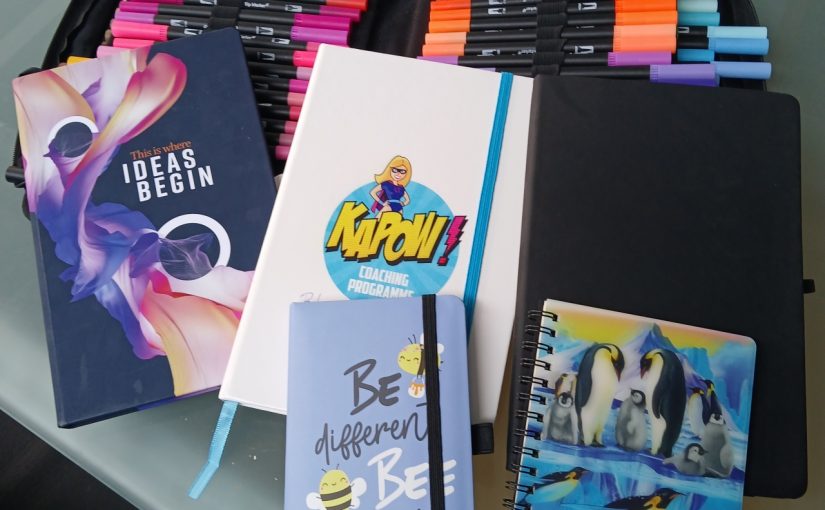
Different notebooks, pens and planning tools showing that people work in different ways
The best system isn’t the one everyone else uses. It’s the one that works for you.

The Dog Training Example

I’ve seen this with Leo.

Ask ten dog trainers how to solve a problem and you may receive ten different answers.

Some approaches suit one dog perfectly.

Others don’t.

Some methods fit the owner’s lifestyle.

Others don’t.

The goal isn’t to prove one trainer right and another wrong.

The goal is to find an approach that works for the dog and the owner standing in front of them.

Business is often exactly the same.

Advice Isn’t One-Size-Fits-All

This is where the question “is there a right and a wrong way in business?” becomes particularly relevant, because different approaches can produce equally successful results.

Business advice can be incredibly valuable.

But it should never replace thinking.

Someone might tell you to post on social media every day.

Someone else may recommend weekly content.

Another person may suggest avoiding social media altogether.

Who’s right?

Potentially all of them.

Potentially none of them.

The answer depends on your goals, your capacity, your audience and your priorities.

The Cost of Chasing the Perfect Method

Many business owners become stuck because they’re searching for certainty.

They spend months researching.

Comparing.

Learning.

Planning.

Waiting until they’re confident they’ve found the perfect approach.

But there often isn’t a perfect approach.

There is only the next sensible step.

Sometimes progress comes from trying something, learning from it, and adjusting as you go.

Different Doesn’t Mean Wrong

Understanding that there isn’t always a right and a wrong way in business can remove a huge amount of pressure and uncertainty.

One of the most useful lessons I’ve learned is that different and wrong are not the same thing.

Someone may organise their diary differently.

Run meetings differently.

Market differently.

Network differently.

Train differently.

Lead differently.

That doesn’t automatically make them wrong.

It simply means they’ve found an approach that works for them.

Consider Advice Carefully

Advice is precious.

Experience is valuable.

Learning from others can save enormous amounts of time and frustration.

But advice should be considered, not blindly followed.

Ask yourself:

  • Does this suit my situation?
  • Does this align with my values?
  • Does this fit my goals?
  • Do I have the capacity to do this well?
  • Will this genuinely help me move forwards?

If the answer is yes, great.

If not, it’s perfectly acceptable to take a different path.

Final Thoughts

When asking whether there is a right and a wrong way in business, it helps to separate ethical principles from personal preferences and working styles.

There are certainly wrong ways to do some things.

Dishonesty is wrong.

Treating people badly is wrong.

Breaking promises is wrong.

But beyond those fundamentals, many business decisions aren’t about right and wrong at all.

They’re about fit.

The best systems, processes and habits are often the ones that work consistently for you.

So before asking whether something is the right way, ask a different question:

“Is this the right way for me?”

Because that’s often the answer that matters most.

The most successful business owners often stop asking whether there is a right and a wrong way in business and start asking whether their chosen approach genuinely works for them.

Ready to make your business work your way?

If this article has sparked an idea, highlighted a challenge, or simply made you stop and think, let’s have a chat. I offer a free, no-obligation discovery call where we can explore what’s working well, what’s getting in your way, and whether I can help you save time and create systems that fit the way you work.

👉 Book your free discovery call here: https://tidycal.com/3zd5zj1/blog-discovery-call-clone20250506083047

Connection Doesn’t Mean Communication Every Day

One of the biggest myths in business is that staying connected means being in constant contact.

It doesn’t.

Many business owners fall into the trap of believing they need to reply immediately, check messages constantly, attend every conversation, and keep every communication channel active at all times.

The result?

A never-ending stream of notifications, interruptions, and distractions that leave very little time for meaningful work.

Being connected and communicating are not the same thing.

Vegetable garden showing different plants growing steadily through regular care and attention over time
Healthy growth doesn’t require constant checking — just consistent care.

The Pressure to Always Be Available

Modern technology has made it easier than ever to stay in touch.

Emails arrive instantly.

Messages appear on multiple platforms.

Social media notifications demand attention.

Video calls can be scheduled within minutes.

The expectation can quickly become that everyone should be available all the time.

But just because somebody can contact you instantly doesn’t mean they need an instant response.

Nor does it mean you are providing a better service by constantly interrupting yourself.

Constant Communication Has a Cost

Every interruption requires your brain to switch gears.

You stop what you are doing.

Read the message.

Process the request.

Decide whether to respond.

Then attempt to return to your original task.

Repeat that dozens of times throughout the day and it becomes difficult to make real progress on anything important.

Many business owners describe feeling busy all day but struggling to identify what they have actually achieved.

Often the culprit isn’t a lack of effort.

It’s too much communication.

Staying Connected Doesn’t Require Constant Contact

Think about the people who matter most in your life.

Friends.

Family.

Long-term clients.

Professional contacts.

You probably don’t communicate with all of them every single day.

Yet the connection still exists.

The relationship remains strong because it is built on trust, consistency, and mutual understanding rather than constant conversation.

The same principle applies in business.

A client doesn’t need daily updates if they know the work is progressing.

A networking contact doesn’t need weekly messages to remember who you are.

Relationships are strengthened by quality interactions, not simply quantity.

Communication Should Have a Purpose

Good communication solves problems.

Provides information.

Builds trust.

Creates clarity.

Poor communication often does the opposite.

It creates noise.

Not every email requires an immediate response.

Not every message requires a conversation.

Not every update needs a meeting.

Sometimes the most effective communication is waiting until you have something useful to say.

Create Space for Meaningful Work

If your day is filled entirely with responding to other people’s requests, there is very little room left for your own priorities.

That doesn’t mean becoming unresponsive.

It means creating healthy boundaries around your communication.

Checking emails at set times.

Turning off unnecessary notifications.

Scheduling focused work periods.

Allowing yourself time to think before responding.

These small changes can dramatically improve both productivity and wellbeing.

Connection Is About Relationships, Not Frequency

The strongest relationships are rarely built on constant communication.

They are built on trust.

Reliability.

Consistency.

And showing up when it matters.

You don’t need to communicate every day to stay connected.

Sometimes the best thing you can do is step away from the notifications, focus on the work that matters, and trust that genuine relationships can withstand a little silence.

Ready to make your business work your way?

If this article has sparked an idea, highlighted a challenge, or simply made you stop and think, let’s have a chat. I offer a free, no-obligation discovery call where we can explore what’s working well, what’s getting in your way, and whether I can help you save time and create systems that fit the way you work.

👉 Book your free discovery call here: https://tidycal.com/3zd5zj1/blog-discovery-call-clone20250506083047

Testimonial from Amy Rowlinson

Why Outsourcing Can Be the Biggest Step Forward in Your Business

Credibility is everything when you’re building a business. You know you’re capable of delivering results, you know the value you bring, but telling people about it only goes so far. Having real client stories that show the difference outsourcing can make—that’s where the magic happens.

As a Virtual Assistant based in Macclesfield, Cheshire, I’ve seen first-hand how many small business owners and entrepreneurs across the Northwest of England are drowning in admin tasks, struggling to find the time to focus on growth. That’s why I always ask my clients for feedback: it’s not just about gathering testimonials, it’s about learning what worked, what could be improved, and what really made the difference. Every client story is proof that outsourcing tasks can unlock productivity, reduce overwhelm, and give you back your time.

Here’s what Amy Rowlinson had to say after working with me:

I’d been needing a VA for over five years but I never took action mainly because I was too busy drowning in admin work that I should have outsourced in the first place. Oh, the irony!

That changed in January this year when I finally decided to get the help I desperately needed. Enter Rachael and what a game changer she’s been.

From day one, Rachael helped me identify and prioritise the tasks I could delegate to her, instantly freeing up my time to focus on the bigger picture in my business. She’s streamlined my inbox, created comprehensive business operation manuals, set up new workflows and improved my existing systems and processes.

If you’re looking for someone who delivers on time, with precision and an eye for detail, I can’t recommend Rachael highly enough.”

Working with Amy has been a joy—helping her reclaim her time so she can focus on her purpose, her coaching practice, and her global podcast, Focus on WHY. Her story highlights exactly why outsourcing admin support to a trusted VA in Cheshire can be the game-changer your business needs.

About Amy Rowlinson

– Life purpose coach, master coach and One of many™ certified women’s coach
– Podcast strategist & host of the global podcast Focus on WHY
– Time Line Therapy™ & hypnosis master practitioner
– Author of Focus on Why: Create a purposeful way of life

📞 07970 827483
📖 Buy your copy of Focus on Why: Create a purposeful way of life here
✉️ Sign up for Friday Focus
https://www.amyrowlinson.com/

Time and Task Management – The Easy Way to Get More Done

We’re all looking for ways to get the most out of life. We work hard in our jobs to achieve different goals at different stages of our lives. Sometimes these goals are just for ourselves and sometimes our goals affect our families, our friends, staff, suppliers and colleagues.

Do you have a goal to earn a high salary? To take exotic holidays three times a year? To raise your children, pay off the mortgage, or perhaps you’d like a sports car or a yacht? These are all achievable goals as long as you put the right steps in place and the right actions in motion.

We all have the same twenty-four hours in the day, so how can it be that some people seem to have more time than you do? Why are they earning more, doing more, going on holiday more and achieving more?

The answer perhaps lies in how effective you are at prioritising your tasks and managing your time. If you find time is running away and you don’t have the time or the energy to do the things you want to do, then now is a good opportunity to look closely at the tasks you’re doing and see how they align with your goals.

Achieve More with Time & Task Management

Do you have a To Do List?

Writing things down is a great way to organise your tasks. It gives you a sense of purpose and by writing down the tasks you want to achieve in a list, it will help you to achieve them. Assigning a number to each task can also help if you need to decide which client to call first, or if you have accounts and administration tasks to complete by a certain date or deadline.

Remember, To Do Lists can be used in your personal life too. You might want to list house chores like hoovering, dusting, washing and food shopping. These are all tasks which take up time. You might want to list family activities such as walking the dog, playing sport, after-school activities and the times when you are seeing friends.

Prioritise Your Tasks

To Do Lists work best when you list items in priority order. They work even better when you assign a timeframe for each task, perhaps a task will take 10 minutes, or maybe it will take 2 hours. Knowing how long a task will take will help you work out how much you can do before lunch, before school pick-up time, or before any evening activities.

You can pick and choose items on your list but try to do the difficult tasks first to get them out of the way. If there is a monster task you’ve been putting off, think about how you can achieve it, or delegate it. If it is important or urgent, try and put these tasks at the top of your list.

There’s no problem having multiple lists and it can be helpful to have lists for daily tasks, weekly tasks and monthly tasks.

Electronic or Paper

Your list can be written electronically or in pen and paper, as long as you check it regularly and achieve items as they become due.

An electronic list can be helpful if you have repetitive tasks as you can type the task once and set a schedule for it to appear on list at regular intervals. A bonus with an electronic list is the ability to set an audible alarm to activate when the task should be started.

A paper list might seem old-school but the act of writing the words in pen or pencil can stick better in your mind. It’s up to you. The important part is to make a note of the tasks you need to complete and to know when each task needs to be done.

Know When to Outsource

There may come a time when you need to outsource some of your tasks. This can be a great way to achieve more tasks in less time. You can delegate house chores within your family, or an alternative is to employ someone to help with childcare or cleaning. At work, if there comes a point when you need staff, or more staff, having your tasks written down in a list will make it much easier to see where your time is going and where you may need some help.

Helping business owners manage their time and identify their tasks is an area I can offer advice and support. With a telephone call or face to face meeting I can chat with you about your tasks and goals and make recommendations.

How to stick to your new habits when the going gets tough

It’s supposed to take at least 21 days for something new to become a habit. So, it’s no surprise that so many of us fail to keep up a new habit, even if to an outsider it looks like the easiest thing in the world.

Know Your “Why”

Knowing the reason, or reasons, why you chose this new habit can be a great motivator. Perhaps you joined the gym to lose a stone in weight and get back into your favourite dress. Perhaps you need to make 30 phone calls a day to achieve your sales target and keep the boss happy.

Knowing your “Why” is key to sticking to your new habit. Write it down. Pin it to your noticeboard. Tell your friends and colleagues. Make sure you’re accountable to someone or something and this is one technique which will help you stick to your habit.

Accountability helps you build new practices

Allow For “Bad Days”

It’s ok to have a “bad day” when starting your new habit. Perhaps you stayed late at work one evening and there wasn’t time to do your new habit, or perhaps the habit you were trying to create was to leave work on time. Perhaps a friend called round unexpectedly and you forgot about your new habit. Maybe it was something beyond your control. Or maybe it was a moment of weakness. Did you doubt yourself? Did you think it was impossible?

The trick is to be kind to yourself, to allow room for an “off day” or a “bad day”, but to make sure you put a limit to it. If you need to “try again tomorrow”, or if you have to “put it off until next week”, that’s ok. But in the morning, make sure you try again. Accept the “bad day” for what it was, just a “bad day” nothing more, nothing less.

Ignore The Naysayers

There’s nothing worse than someone sabotaging your efforts to stick to your new habit. Whether it’s a well-intentioned comment, a bit of jealous sarcasm, or out and out mischief, you need to rise above it. If you have created a habit to stop smoking, then someone offering you a cigarette could happen, especially if it was a shared habit in business or social time. It will take time for other people to adapt to the “new you”.

It’s important to concentrate in the moment where you could be drawn back into your old habit and to recognise those moments and adapt accordingly. If you’ve allocated Friday afternoon for admin and accounts, you need to stick to it for this to become a habit. It might be hard if everyone else is having a “poets” day or you are invited for an after-lunch drink.

Focus On The Outcome

In my experience, focussing on the outcome is the best way to stick to a new habit. I try and remember why I have formed the new habit. I allow for bad days and do my best to ignore the naysayers. It can be hard, but when I review the month, I look at what I’ve achieved, how the new habits have helped not just grow my business, but have made significant differences to other people’s businesses. For me, this is the perfect outcome.

When I can help you create new habits or uncover why you’re not sticking to your habits, please get in touch. I will chat with you and identify where things can be improved.

Accountability is a brilliant way to set up new habits, I worked with Julie who says

I’ve learned

  • where I’m wasting time doing the things that aren’t going to get my closer to my goals

  • how to prioritise my self-care which means I have more energy to complete my tasks

  • taking time for mindfulness practices helps my motivation and keeps me engaged in my tasks

  • how to not give myself such a hard time when things don’t go to plan

  • how to break down tasks into easier steps to create momentum towards success”

If you would like to know more about how I can help you be more accountable for taking actions, then either check out my group accountability sessions or book a discovery call with me.

How Accountability Can Help You Achieve More

There’s a lot of talk at the moment about accountability and how it can help you achieve more in your personal and professional life. Being accountable is supposed to make you more disciplined and focussed towards setting ambitious goals, writing down the steps to achieve them and reporting back to confirm it has been done.

Accountability is a two-way process, where you discuss what you would like to achieve with someone who listens, supports and advises. That person then checks in with you regularly to enquire if you have met your target, make comments or suggestions, and to help keep you motivated and on track to achieve your goals.

It doesn’t have to be a mutual accountability, it can come from a parent, a friend or a boss. It is becoming increasingly popular to outsource your accountability to a third party who can offer impartial, non-judgemental and confidential advice on anything you might want to achieve.

The accountability check can be hourly, daily, weekly or monthly, depending on the task you want to achieve, the target you have given yourself or the goal you have set. Accountability is also measured by how much assistance you require and how much the other person can offer.

I have been working with Adrian, helping him refine and improve his company’s processes and team accountability.


The Vision

Adrian’s vision is to help his clients get more leads, more customers and more business through automating marketing systems, processes and communications. However, with over ten employees and external contractors, the company’s internal processes weren’t being tracked effectively and consequently the team wasn’t working efficiently.


The Reality

“I was jumping from one task to another,” Adrian told me, “I ended up doing much of the work myself. There was just no time to manage the projects and tasks,” he added and showed me how his diary was consumed with work related tasks, leaving him little time for himself or to spend quality time with his family.

Through chatting with Adrian, he acknowledged the solution was to focus on better processes and team accountability. Despite having a large wage bill, he told me his company wasn’t fully realising the benefits of having a team of skilled people on board.

Accountability helps with Mental as well as physical tasks

The Solution

After Adrian approached me asking for my help to assist him turning things around, we discussed the best strategy for this.

At first, Adrian asked me to monitor what his team were doing on a daily basis. Then he asked me to keep the team accountable for actioning the tasks he had assigned to each of them. Adrian wanted that external advice and opinion from me to get clarity on the processes and remove unnecessary steps and bottlenecks. Crucially, Adrian asked me to hold him accountable for his actions too. He was determined changes should start from the top and filter throughout his company to maximise everyone’s effectiveness.

When I began working with Adrian there were over 60 outstanding actions. Some actions were overdue by several months and there was no process in place to alert the team or record if an action had been taken. Although the outstanding actions weren’t threatening Adrian’s company, they were slowly holding him back and giving him a poor reputation among customers who had been left waiting. The pressure of the outstanding actions also had a negative impact on the team, causing added stress and undermining the team spirit and morale.

In Adrian’s Words:

Rachael is extremely organised and logical. She has a no-nonsense attitude to excuses and has motivated my team, improved my processes and achieved outstanding results. I would have no hesitation recommending Rachael to any business owner who needs accountability.” – Adrian Savage

If you would like to know more about how I can help you be more accountable for taking actions, then either check out my group accountability sessions or book a discovery call with me.

How to Make More Money in the Same Time

Does it sound too good to be true to think you can make more money in the same time? How can it be true? What’s the catch? If it’s true why isn’t everyone doing this?

The answer is it’s easy to become complacent. We can fall into the trap of thinking the way things are is the way things will always be. If we earn enough to keep our heads above water, isn’t that ok?

Perhaps in the short term it’s ok. However, life doesn’t stand still. The cost of living goes up. Unexpected and unpredictable things can happen. We may have larger expenses, or we may simply want bigger and better things. This all costs money.

It stands to reason that if we can’t make more time, then we need to make more money in the same time. We can take on extra shifts or work longer hours, but in the long run this isn’t sustainable and working harder and harder will eventually take its toll on our health, family, relationships, friendships and business.

It doesn’t have to be like that. In fact, I’ve helped several people exceed their expectation of how much they can earn in their lifetime. It can come as a big surprise when you realise you could be earning more money doing the same thing or by introducing small changes into your daily habits and routines.

Time Vs Money - accountability could be the answer
Time Vs Money – accountability could be the answer

One of the key questions I ask is “have you considered increasing your prices?”. This simple question often initially meets some resistance. It triggers a fear of losing customers and a fear of not being able to attract new customers.

The reality is that prices go up (and down) all the time. Customers are reasonably tolerant of price changes providing they can see the reason and a benefit to them.


Include No-Cost Extras

An easy way to make a price increase more palatable is to include no-cost extras. I can help you find these within your business and show you how to turn the no-cost extras into selling points in your online and offline marketing messages to customers and prospective customers.

Remember, if you mention prices in your contract, or if a customer has signed up with you to pay an agreed amount, you will need to give them notice of a price increase. Please get in touch if you would like me to check the small print within your contract and make recommendations if your current contract has clauses which need to change to accommodate any price changes.


Reduce Your Costs

Another easy way to make more money is simply to reduce your costs. If you can negotiate a better discount, or find a cheaper supplier, you can save tens, hundreds and sometimes thousands of pounds. Just by shopping around, comparing prices and asking for discounts you may uncover hidden savings. I recommend reviewing your costs at least once a year. This applies to home purchases as well as business suppliers.

A good example is checking for the best petrol prices in the local area, not just stopping at the nearest garage. Another example is finding the most cost-effective supplier for office stationery as costs can vary, especially if you can afford to buy in bulk. Shopping around for quotes when buying machinery or technology can lead to considerable savings. Recently I bought a new laptop and saved money by checking the features offered by different vendors for the same product.

Work Smarter Not Harder

Have a think about how well you use your time, do you procrastinate? If you’re overwhelmed do you go to social media for a scroll?


Thought about having an accountability buddy?

Here’s what Julie from Relaxologies said about working with me:

“Rachael has been my accountability buddy for a few months now. I’ve not only taken responsibility for making the most of my time and energy but I’ve learned so much about myself.

I’ve learned
1. where I’m wasting time doing the things that aren’t going to get my closer to my goals
2. how to prioritise my self-care which means I have more energy to complete my tasks
3. taking time for mindfulness practices helps my motivation and keeps me engaged in my tasks
4. how to not give myself such a hard time when things don’t go to plan
5. how to break down tasks into easier steps to create momentum towards success

Rachael’s spreadsheet is now always open on my laptop and keeping my eye on and updating it gives me a little dopamine rush.

She has a great way of talking me out of energy slump and this helps me to think more laterally on how to boost my energy levels and motivation in a way that suits me.

Thank you Rachael :-)”

Want to know more, check out my group accountability package.

Is it possible to keep your house and your business running smoothly?

Is it possible to keep your house and your business running smoothly?

With many people working from home, the line drawn between office hours and home hours is often very blurry. Sometimes it feels as though the hours overlap and it’s not obvious where work ends, and home begins.

It’s not uncommon for someone to be answering a business phone call while loading the dishwasher. Or booking a meeting to finish in time to make the school run. Or helping with homework while catching up on accounts and admin. How many times have you worked late into the night when your daytime hours have been spent caring for others?

This is where having a system in place at home, as well as for your business, can make sure everything gets done. I can show you how it’s possible to keep your home clean and tidy without it impacting on your business work or family life. Just as a tidy desk can symbolise a tidy mind, having an organised household routine can take the pressure off running your business.

Get Started

To get started is the top tip. Today can be the day you make the changes. This is the first step to turning things around. Instead of chasing your tail, you can take control of your tasks and your time.

Structure makes home & work life easier

Involve Others

If you have a partner or family members who can help, involve them. Make it known that it’s everyone’s job to help around the house. Create a rota for tasks. Even if you think it is easier to do something like the laundry yourself, add up how many hours this takes each week. If you can delegate the task to another family member, you can free up your time for something else. You can introduce incentives or rewards based on the type of task, the amount of time, or the complexity.

There may come a point when it becomes cost effective to outsource household chores like laundry, ironing, loading and unloading the dishwasher, hoovering, dusting, making the beds, walking the dog and washing the car. Perhaps investing in having a cleaner once a week could help. Is it worth the price of having extra hours for yourself and for family time?

Group Tasks

Just as you might tackle a business project by grouping tasks together you can do exactly the same at home. If you have a batch of invoices to send out, you might do them one at a time, or you might do them all on a Friday evening.

The same principle applies when keeping your home and your business running smoothly. You can group tasks and allocate them to mornings or afternoons or assign them to a particular day of the week. If you have free time on Tuesday mornings, can you make that the time when you blitz the cleaning? If you put a time limit on the task it can help keep you accountable and make sure the time doesn’t drift away.

Accept Imperfection

It can be extremely hard for many business owners to accept things can’t be perfect all the time. High performers, ambitious, driven, successful, there is an inbuilt expectation for perfection, from themselves and those around them. In reality, dust happens, washing needs to be done, children need to be dropped off and collected from school and these things don’t always go to plan.

It might rain just as you’re about to put the washing out. A child may be sick during the day and need collecting early. Dusting seems to be a never-ending chore, especially if you have cats and dogs.

This is where I help my clients restore order at home and in the workplace. I’ll work with you to create responsibility lists and achievable accountability action plans that work for everyone.

Click here for more information and a free discovery call, let’s get your house and your business running smoothly.