Blogs

I Did a Thing… And It Turns Out It Might Help with Capacity Planning for Small Business

Sometimes the most useful things in business — especially when it comes to capacity planning for small business — aren’t complicated systems or fancy tools.

Sometimes… it’s a wall.
And a pen.

I wasn’t trying to create anything clever.

I just needed to see — properly see — what my next few months actually looked like, and without realising it, I’d started my own version of capacity planning for small business.

So I mapped it out.

Not tasks.
Not to-do lists.
Just hours.

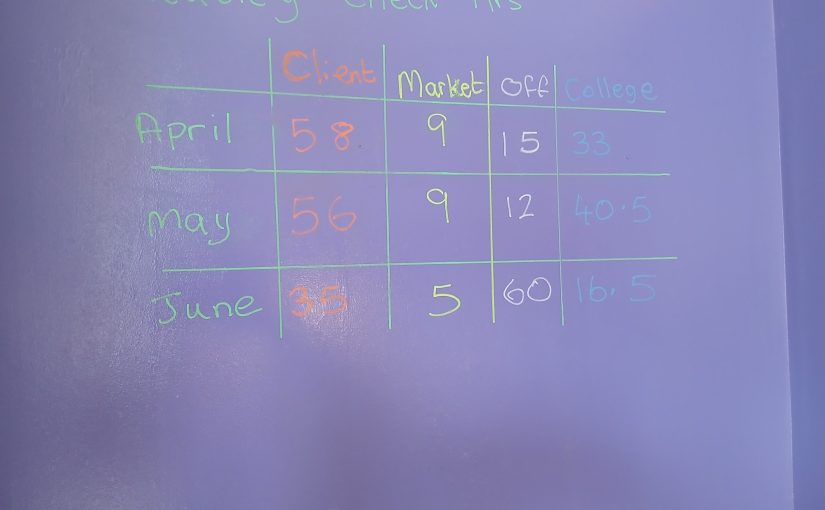
Here’s what that looked like on my wall:

Whiteboard showing a monthly time breakdown for a small business owner, with hours split into client work, marketing, time off, and college for April, May, and June.
A simple visual “reality check” of available hours across April, May, and June — highlighting how capacity changes month to month.

What I Actually Tracked (Without Overthinking Capacity Planning for Small Business)

split my time into four simple categories:

  • Client
  • Marketing
  • Off (time away / not working)
  • College

And I mapped out April, May, and June.

That’s it.

No spreadsheets.
No formulas.
Just a visual “this is my life” overview.

And Then Something Clicked About Capacity Planning for Small Business

When I stepped back and looked at it…

I realised something really important:

👉 My capacity isn’t consistent month to month.

And I don’t mean “it feels busy.”

I mean physically, mathematically different.

  • April: strong client capacity
  • May: slightly less
  • June: significantly reduced (because I’m away for two weeks)

Nothing dramatic.
Nothing wrong.

Just… reality.

Why Capacity Planning for Small Business Matters More Than You Think

This is where most small business owners get caught out.

You’re looking at your business thinking:

  • “Why does this month feel harder?”
  • “Why can’t I fit everything in?”
  • “Why am I behind?”

But you’re comparing:

👉 A high-capacity month
with
👉 A low-capacity month

…as if they’re the same.

They’re not.

And your wall (or lack of one) is quietly proving it.

Many small business owners struggle with this because they don’t have clear visibility of their time (see guidance on starting a business here: https://www.gov.uk/set-up-business

The Bit That Changes Everything

1. You set better expectations

You stop over promising in months where you physically have less time.

2. You avoid overbooking

Because you can literally see there isn’t space.

3. You drop the guilt

“Not this month” stops feeling like failure…
and starts feeling like good decision-making.

A Small (But Powerful) Next Step

If you wanted to take this one step further, you could loosely notice what sits inside “client” time:

  • 💼 Client delivery
  • 🧾 Admin
  • 🏡 Life admin

Not to over-track.
Just to spot patterns.

Because sometimes it’s not the work that’s heavy…

…it’s everything wrapped around it.

The Real Takeaway

This wasn’t meant to be a system.

It was just me trying to get my head straight.

But it’s turned into something really useful:

👉 A simple, visual capacity reality check

And honestly?

Most overwhelm I see in small business owners isn’t about workload.

It’s about invisible capacity limits.

If this is resonating, you might also find this helpful: Communication in Small Business: Are You Saying One Thing and Doing Another?

Quick Reality Check for You

If you paused right now…

Could you answer:

  • How many hours you actually have this month?
  • How much of that is already committed?
  • What’s realistically left?

If not — that might be your starting point

Final Thought

You don’t need a complicated planner.

You don’t need another system.

Sometimes you just need to make your time visible.

Because once you can see it…

👉 You can work with it, not against it.


How Different People Work in Small Business

How Different People Work in Small Business (And Why It Matters More Than You Think)

Not Everyone Works the Same Way — And That’s Not the Problem

Understanding how different people work in small business is key to improving communication and follow-through.

By this point, you might be thinking:

  • “I need to communicate better.”
  • “I need to follow through more.”
  • “I need to respect people’s time.”And yes—those things matter.But there’s something just as important that often gets missed:Not everyone works the same way.And when we ignore that, we don’t get better communication…
    We get frustration, pressure, and misunderstandings instead.
How different people work in small business shown through organised and cluttered workspaces
Not everyone works the same way — and that’s not the problem

The Hidden Assumption That Causes Friction

In small business, it’s easy to assume:

“If I’ve said it clearly, they should just do it.”

But “clear” isn’t universal.

Because people process, prioritise, and respond differently.

Some people:

  • Need time to think before replying
  • Prefer written instructions over verbal ones
  • Work best in focused blocks
  • Struggle with switching between tasksOthers:
  • Think out loud and respond quickly
  • Work best under pressure
  • Jump between tasks easily
  • Prefer conversation over structure

Neither is wrong.But when those styles clash, it feels like something is going wrong.

This Is Where Capacity Gets Misread as Character

When someone doesn’t respond how we expect, it’s easy to think:

  • “They’re disorganised.”
  • “They don’t care.”
  • “They’re unreliable.”But often, what’s really happening is:

Their way of working doesn’t match the situation they’re in.

Or expectations haven’t been aligned.

Or their capacity is stretched in a way you can’t see.

That’s not a character flaw.

That’s a mismatch.

Neurodivergence Isn’t Rare — It’s Just Not Always Visible

Many business owners (and their clients) are neurodivergent—whether diagnosed or not.

That can affect:

  • How quickly they process information
  • How they organise tasks
  • How they manage time and energy
  • How they respond to pressure

What looks like “avoidance” might be overwhelm.

What looks like “slow” might be processing.

What looks like “scattered” might be managing too many inputs at once.

Understanding Changes How You Communicate

Instead of asking “Why haven’t they done this?” — which is something I explore more in my blog on communication in small business — you start asking: “What do they need to be able to do this?

That might mean:

  • Being clearer about deadlines
  • Breaking things into smaller steps
  • Agreeing how communication will happen
  • Giving space for processing time
  • Or simply not expecting everyone to work like you do.

This Isn’t About Lowering Standards

This isn’t about accepting poor communication or avoiding accountability.

It’s about making sure expectations are realistic and workable for the person involved.

When expectations and working styles align:

  • Things get done
  • Communication improves
  • Relationships feel easier

The Practical Check

If something feels stuck, ask:

  • Have I been clear in a way that works for them?
  • Have we agreed how and when things will happen?
  • Am I assuming they work the same way I do?
  • Is this a communication issue or a capacity mismatch?

Why How Different People Work in Small Business Matters

In a small business, it’s just people. When you understand how different people work in small business, everything becomes easier to manage.

And how those people work together determines everything:

  • Progress
  • Trust
  • Reputation
  • ResultsUnderstanding working styles makes everything easier to follow through on.

Final Thought

Not everyone works the same way.

And when you stop expecting them to… everything starts to move more smoothly.

Respecting People’s Time in Small Business: The Quiet Marker of Professionalism

Respecting people’s time in small business sounds obvious.

Of course we respect people’s time.

But when you look closely at how we run our businesses — our emails, meetings, deadlines, follow-ups — time respect is often where standards quietly slip.

And it rarely happens because someone is careless.

It usually happens because they are overloaded.


Organised workspace showing how respecting people’s time in small business starts with planning and structure
Respecting people’s time starts with structure, margin and preparation.

What Does Respecting People’s Time in Small Business Actually Mean?

It isn’t just about turning up on time.

Respecting people’s time in small business means:

  • Starting and finishing meetings when you said you would
  • Sending information before someone has to chase
  • Not canceling last minute unless it’s unavoidable
  • Being prepared
  • Making decisions instead of deferring endlessly
  • Not over-talking when the point has already landed

Time is the one resource none of us can get back.

When someone gives you an hour, they’re giving you part of their day — their energy, their focus, their capacity.

That matters.

Where Time Slips (Without You Noticing)

  • You double-book because you didn’t check properly.
  • You arrive flustered because you were finishing “one last thing”.
  • You run over because you didn’t structure the meeting.
  • You delay a decision because you’re unsure — and everyone waits.
  • You send incomplete information and trigger extra emails.

Individually, these feel small.

Collectively, they chip away at trust.

The Capacity Problem (Not a Character Flaw)

This is important.

The majority of UK businesses are micro-businesses — often run by one person wearing every hat. According to the latest UK business population estimates, most businesses have fewer than 10 employees.

When time standards drop, it’s rarely a professionalism issue.

It’s usually a capacity issue.

If your diary is over packed…

If you’re doing all your own admin…

If you’re switching tasks constantly…

If you’re replying to messages in between client calls…

You don’t have margin.

And when you don’t have margin, time respect is the first casualty.

Not because you don’t care.

Because you’re stretched.

Quick Self-Audit: Are You Respecting People’s Time?

  • Do your meetings regularly run over?
  • How often do people chase you for things?
  • Are you prepared before calls — or catching up live?
  • Do you delay responses because you’re overwhelmed?
  • Are you scheduling too tightly with no buffer?

If even one of those stung a little, it’s not a failure.

It’s feedback.

The Ripple Effect of Respecting People’s Time in Small Business

  • Builds quiet credibility
  • Reduces friction
  • Speeds up decisions
  • Improves referrals
  • Makes collaboration easier

People notice when you are organised, clear and prepared.

They may not compliment you on it.

But they trust you more because of it.

And trust compounds.

Writing a structured meeting agenda to improve time management in a small business
Structure turns meetings into progress, not placeholders.

Small Changes That Improve Time Respect in Small Business

  • Add 10-minute buffers between meetings
  • Set a 24-hour response rule (even if it’s just “Received, I’ll respond properly tomorrow.”)
  • Create simple agendas for calls
  • Block weekly admin time instead of scattering it
  • Delegate repetitive tasks that steal focus

Time respect improves when your systems improve.

When It’s Time to Get Support

If you’re constantly running late, chasing your tail or apologising for delays, it might not be a discipline issue.

It might be a structure issue.

FSB research shows that, for the first time, more small firms expect to shrink or sell than expand — a signal that capacity constraints and pressures like admin tasks are weighing heavily on businesses.

Sometimes the most respectful thing you can do — for yourself and others — is stop trying to do everything alone.

A focused hour clearing backlog.

Transcribing meetings so nothing is forgotten.

Uploading content instead of squeezing it in at 9pm.

Getting finance check-ins handled regularly instead of reactively.

Support doesn’t mean you’re failing.

It means you’re protecting standards.

Professionalism Is Quiet

In small business, professionalism isn’t flashy.

It’s not branding.

It’s not big launches.

It’s not polished Instagram graphics.

It’s clear communication.

It’s follow-through.

It’s respecting people’s time.

And often, the people who do this best are the ones who’ve built enough space in their week to actually deliver it.

If communication standards are slipping, I wrote more about that here → Communication Blog

If you want to tighten your standards without stretching yourself thinner, that’s exactly what a Focus on Power Hour is designed for.

One hour.

Targeted progress.

Less scrambling.

Because respecting people’s time starts with respecting your own.

If you’re trying to do everything yourself, that’s usually where time standards start to wobble, I’ve written about outsourcing here.

Communication in Small Business: Are You Saying One Thing and Doing Another?

Communication in Small Business: Are You Saying One Thing and Doing Another?

Communication in small business isn’t just about sending emails or posting on social media — it’s about what happens afterwards.

It’s about trust and follow-through. Most importantly, your actions must match your words.

For many micro business owners, communication becomes a hidden bottleneck. It’s rarely dramatic; however, it quietly damages your reputation over time.


Why Communication in Small Business Matters More Than You Think

In larger organisations, systems catch things before they slip.

You are the system, in a small business – which means nothing moves unless you move it.

If you don’t send the notes, they don’t go. Without follow-up, nothing moves forward — and when “later” never arrives, the gap becomes visible.

Because of this, communication in small business directly affects:

  • Customer confidence

  • Supplier trust

  • Professional reputation

  • Repeat referrals

On the other hand, weak communication creates confusion and leads to chasing; eventually, hesitation follows.

Most people won’t complain. Instead, they quietly adjust their expectations.

That’s where problems begin.


The Communication Block in Small Business

A communication block in small business rarely starts with carelessness.

Instead, it starts with capacity.

You may have too many tabs open, too many promises made in good faith, and too little time to close the loop.

You intend to reply.
Those notes were meant to go out.
A follow-up was always the plan.

However, intention isn’t the same as execution.

And when people have to chase you, it changes how they feel about working with you.

Sometimes the issue isn’t strategy. It’s backlog.

That’s exactly what my Focus on Power Hours are designed to fix — structured time to clear follow-ups, send what’s outstanding, and remove that low-level pressure from your inbox.


Communication in Small Business and Networking Leadership

Communication doesn’t stop at client work.

It shows up in community leadership too.

For example, if you’re running your own networking events — or supporting established communities like Mums at Work — — your credibility isn’t built only in the room; it’s reinforced afterwards.

So ask yourself:

  • Were the promised notes sent?

  • Was the replay shared?

  • Were introductions followed up?

  • Were public commitments actioned?

Professional follow-up turns attendees into long-term relationships.

The same principle applies in structured online communities such as 1Networking, where consistency after the session builds trust.

If event admin is slipping, that’s not a character flaw. Instead, it’s a capacity issue. Structured support ensures your professionalism carries on long after the chairs are stacked away.


When Communication Breaks Down Because Nothing Was Written

Another common gap is documentation.

Perhaps you hold a brilliant meeting.
Or deliver a strong webinar.
Maybe you facilitate a powerful strategy session.

Then nothing gets written down.

Consequently, insights fade, details blur, and follow-ups stall.

Clear documentation strengthens communication in small business immediately.

Transcription is one of the simplest ways to prevent misunderstandings, reduce chasing, and protect your reputation.

When conversations are captured properly, clarity improves — internally and externally.


The Real Cost of Poor Communication in Small Business

Poor communication doesn’t just waste time.

In reality, poor communication in small business creates emotional friction.

People feel awkward chasing you.
They hesitate before recommending you.
They wonder whether they’re being a nuisance.

Over time, that hesitation costs far more than you realise.

By contrast, proactive communication builds confidence. It makes people feel respected. It makes them feel looked after, and respecting people’s time is one of the clearest ways to demonstrate that professionalism in action.

And respected businesses grow faster.


This Isn’t About Perfection

Good communication in small business isn’t about never slipping up.

Instead, it’s about transparency.

If something won’t be ready, say so.
If you’re behind, acknowledge it.
If timelines need adjusting, communicate early.

Most people are patient.

What they struggle with, however, is silence or inconsistency.

Or inconsistency.


A Simple Communication Audit for Your Small Business

Take five minutes.

Ask yourself:

  • Where are people currently chasing me?

  • What have I promised that hasn’t been actioned?

  • Where could I communicate more clearly?

  • What small system would prevent this happening again?

Because communication in small business isn’t a “nice to have.”

It is your brand, your customer experience, and your reputation.

If you’re feeling that quiet pressure of unfinished follow-ups or half-done promises, that’s exactly where I step in.

Whether it’s clearing backlog in a Power Hour, strengthening documentation with transcription, or supporting you behind the scenes with event follow-up, the goal is the same:

Clarity.
Consistency.
Follow-through.

I’m Rachael, your Focus Guru.


Testimonial from Amy Rowlinson

Why Outsourcing Can Be the Biggest Step Forward in Your Business

Credibility is everything when you’re building a business. You know you’re capable of delivering results, you know the value you bring, but telling people about it only goes so far. Having real client stories that show the difference outsourcing can make—that’s where the magic happens.

As a Virtual Assistant based in Macclesfield, Cheshire, I’ve seen first-hand how many small business owners and entrepreneurs across the Northwest of England are drowning in admin tasks, struggling to find the time to focus on growth. That’s why I always ask my clients for feedback: it’s not just about gathering testimonials, it’s about learning what worked, what could be improved, and what really made the difference. Every client story is proof that outsourcing tasks can unlock productivity, reduce overwhelm, and give you back your time.

Here’s what Amy Rowlinson had to say after working with me:

I’d been needing a VA for over five years but I never took action mainly because I was too busy drowning in admin work that I should have outsourced in the first place. Oh, the irony!

That changed in January this year when I finally decided to get the help I desperately needed. Enter Rachael and what a game changer she’s been.

From day one, Rachael helped me identify and prioritise the tasks I could delegate to her, instantly freeing up my time to focus on the bigger picture in my business. She’s streamlined my inbox, created comprehensive business operation manuals, set up new workflows and improved my existing systems and processes.

If you’re looking for someone who delivers on time, with precision and an eye for detail, I can’t recommend Rachael highly enough.”

Working with Amy has been a joy—helping her reclaim her time so she can focus on her purpose, her coaching practice, and her global podcast, Focus on WHY. Her story highlights exactly why outsourcing admin support to a trusted VA in Cheshire can be the game-changer your business needs.

About Amy Rowlinson

– Life purpose coach, master coach and One of many™ certified women’s coach
– Podcast strategist & host of the global podcast Focus on WHY
– Time Line Therapy™ & hypnosis master practitioner
– Author of Focus on Why: Create a purposeful way of life

📞 07970 827483
📖 Buy your copy of Focus on Why: Create a purposeful way of life here
✉️ Sign up for Friday Focus
https://www.amyrowlinson.com/

Time and Task Management – The Easy Way to Get More Done

We’re all looking for ways to get the most out of life. We work hard in our jobs to achieve different goals at different stages of our lives. Sometimes these goals are just for ourselves and sometimes our goals affect our families, our friends, staff, suppliers and colleagues.

Do you have a goal to earn a high salary? To take exotic holidays three times a year? To raise your children, pay off the mortgage, or perhaps you’d like a sports car or a yacht? These are all achievable goals as long as you put the right steps in place and the right actions in motion.

We all have the same twenty-four hours in the day, so how can it be that some people seem to have more time than you do? Why are they earning more, doing more, going on holiday more and achieving more?

The answer perhaps lies in how effective you are at prioritising your tasks and managing your time. If you find time is running away and you don’t have the time or the energy to do the things you want to do, then now is a good opportunity to look closely at the tasks you’re doing and see how they align with your goals.

Achieve More with Time & Task Management

Do you have a To Do List?

Writing things down is a great way to organise your tasks. It gives you a sense of purpose and by writing down the tasks you want to achieve in a list, it will help you to achieve them. Assigning a number to each task can also help if you need to decide which client to call first, or if you have accounts and administration tasks to complete by a certain date or deadline.

Remember, To Do Lists can be used in your personal life too. You might want to list house chores like hoovering, dusting, washing and food shopping. These are all tasks which take up time. You might want to list family activities such as walking the dog, playing sport, after-school activities and the times when you are seeing friends.

Prioritise Your Tasks

To Do Lists work best when you list items in priority order. They work even better when you assign a timeframe for each task, perhaps a task will take 10 minutes, or maybe it will take 2 hours. Knowing how long a task will take will help you work out how much you can do before lunch, before school pick-up time, or before any evening activities.

You can pick and choose items on your list but try to do the difficult tasks first to get them out of the way. If there is a monster task you’ve been putting off, think about how you can achieve it, or delegate it. If it is important or urgent, try and put these tasks at the top of your list.

There’s no problem having multiple lists and it can be helpful to have lists for daily tasks, weekly tasks and monthly tasks.

Electronic or Paper

Your list can be written electronically or in pen and paper, as long as you check it regularly and achieve items as they become due.

An electronic list can be helpful if you have repetitive tasks as you can type the task once and set a schedule for it to appear on list at regular intervals. A bonus with an electronic list is the ability to set an audible alarm to activate when the task should be started.

A paper list might seem old-school but the act of writing the words in pen or pencil can stick better in your mind. It’s up to you. The important part is to make a note of the tasks you need to complete and to know when each task needs to be done.

Know When to Outsource

There may come a time when you need to outsource some of your tasks. This can be a great way to achieve more tasks in less time. You can delegate house chores within your family, or an alternative is to employ someone to help with childcare or cleaning. At work, if there comes a point when you need staff, or more staff, having your tasks written down in a list will make it much easier to see where your time is going and where you may need some help.

Helping business owners manage their time and identify their tasks is an area I can offer advice and support. With a telephone call or face to face meeting I can chat with you about your tasks and goals and make recommendations.

How to stick to your new habits when the going gets tough

It’s supposed to take at least 21 days for something new to become a habit. So, it’s no surprise that so many of us fail to keep up a new habit, even if to an outsider it looks like the easiest thing in the world.

Know Your “Why”

Knowing the reason, or reasons, why you chose this new habit can be a great motivator. Perhaps you joined the gym to lose a stone in weight and get back into your favourite dress. Perhaps you need to make 30 phone calls a day to achieve your sales target and keep the boss happy.

Knowing your “Why” is key to sticking to your new habit. Write it down. Pin it to your noticeboard. Tell your friends and colleagues. Make sure you’re accountable to someone or something and this is one technique which will help you stick to your habit.

Accountability helps you build new practices

Allow For “Bad Days”

It’s ok to have a “bad day” when starting your new habit. Perhaps you stayed late at work one evening and there wasn’t time to do your new habit, or perhaps the habit you were trying to create was to leave work on time. Perhaps a friend called round unexpectedly and you forgot about your new habit. Maybe it was something beyond your control. Or maybe it was a moment of weakness. Did you doubt yourself? Did you think it was impossible?

The trick is to be kind to yourself, to allow room for an “off day” or a “bad day”, but to make sure you put a limit to it. If you need to “try again tomorrow”, or if you have to “put it off until next week”, that’s ok. But in the morning, make sure you try again. Accept the “bad day” for what it was, just a “bad day” nothing more, nothing less.

Ignore The Naysayers

There’s nothing worse than someone sabotaging your efforts to stick to your new habit. Whether it’s a well-intentioned comment, a bit of jealous sarcasm, or out and out mischief, you need to rise above it. If you have created a habit to stop smoking, then someone offering you a cigarette could happen, especially if it was a shared habit in business or social time. It will take time for other people to adapt to the “new you”.

It’s important to concentrate in the moment where you could be drawn back into your old habit and to recognise those moments and adapt accordingly. If you’ve allocated Friday afternoon for admin and accounts, you need to stick to it for this to become a habit. It might be hard if everyone else is having a “poets” day or you are invited for an after-lunch drink.

Focus On The Outcome

In my experience, focussing on the outcome is the best way to stick to a new habit. I try and remember why I have formed the new habit. I allow for bad days and do my best to ignore the naysayers. It can be hard, but when I review the month, I look at what I’ve achieved, how the new habits have helped not just grow my business, but have made significant differences to other people’s businesses. For me, this is the perfect outcome.

When I can help you create new habits or uncover why you’re not sticking to your habits, please get in touch. I will chat with you and identify where things can be improved.

Accountability is a brilliant way to set up new habits, I worked with Julie who says

I’ve learned

  • where I’m wasting time doing the things that aren’t going to get my closer to my goals

  • how to prioritise my self-care which means I have more energy to complete my tasks

  • taking time for mindfulness practices helps my motivation and keeps me engaged in my tasks

  • how to not give myself such a hard time when things don’t go to plan

  • how to break down tasks into easier steps to create momentum towards success”

If you would like to know more about how I can help you be more accountable for taking actions, then either check out my group accountability sessions or book a discovery call with me.

How Accountability Can Help You Achieve More

There’s a lot of talk at the moment about accountability and how it can help you achieve more in your personal and professional life. Being accountable is supposed to make you more disciplined and focussed towards setting ambitious goals, writing down the steps to achieve them and reporting back to confirm it has been done.

Accountability is a two-way process, where you discuss what you would like to achieve with someone who listens, supports and advises. That person then checks in with you regularly to enquire if you have met your target, make comments or suggestions, and to help keep you motivated and on track to achieve your goals.

It doesn’t have to be a mutual accountability, it can come from a parent, a friend or a boss. It is becoming increasingly popular to outsource your accountability to a third party who can offer impartial, non-judgemental and confidential advice on anything you might want to achieve.

The accountability check can be hourly, daily, weekly or monthly, depending on the task you want to achieve, the target you have given yourself or the goal you have set. Accountability is also measured by how much assistance you require and how much the other person can offer.

I have been working with Adrian, helping him refine and improve his company’s processes and team accountability.


The Vision

Adrian’s vision is to help his clients get more leads, more customers and more business through automating marketing systems, processes and communications. However, with over ten employees and external contractors, the company’s internal processes weren’t being tracked effectively and consequently the team wasn’t working efficiently.


The Reality

“I was jumping from one task to another,” Adrian told me, “I ended up doing much of the work myself. There was just no time to manage the projects and tasks,” he added and showed me how his diary was consumed with work related tasks, leaving him little time for himself or to spend quality time with his family.

Through chatting with Adrian, he acknowledged the solution was to focus on better processes and team accountability. Despite having a large wage bill, he told me his company wasn’t fully realising the benefits of having a team of skilled people on board.

Accountability helps with Mental as well as physical tasks

The Solution

After Adrian approached me asking for my help to assist him turning things around, we discussed the best strategy for this.

At first, Adrian asked me to monitor what his team were doing on a daily basis. Then he asked me to keep the team accountable for actioning the tasks he had assigned to each of them. Adrian wanted that external advice and opinion from me to get clarity on the processes and remove unnecessary steps and bottlenecks. Crucially, Adrian asked me to hold him accountable for his actions too. He was determined changes should start from the top and filter throughout his company to maximise everyone’s effectiveness.

When I began working with Adrian there were over 60 outstanding actions. Some actions were overdue by several months and there was no process in place to alert the team or record if an action had been taken. Although the outstanding actions weren’t threatening Adrian’s company, they were slowly holding him back and giving him a poor reputation among customers who had been left waiting. The pressure of the outstanding actions also had a negative impact on the team, causing added stress and undermining the team spirit and morale.

In Adrian’s Words:

Rachael is extremely organised and logical. She has a no-nonsense attitude to excuses and has motivated my team, improved my processes and achieved outstanding results. I would have no hesitation recommending Rachael to any business owner who needs accountability.” – Adrian Savage

If you would like to know more about how I can help you be more accountable for taking actions, then either check out my group accountability sessions or book a discovery call with me.

How to Make More Money in the Same Time

Does it sound too good to be true to think you can make more money in the same time? How can it be true? What’s the catch? If it’s true why isn’t everyone doing this?

The answer is it’s easy to become complacent. We can fall into the trap of thinking the way things are is the way things will always be. If we earn enough to keep our heads above water, isn’t that ok?

Perhaps in the short term it’s ok. However, life doesn’t stand still. The cost of living goes up. Unexpected and unpredictable things can happen. We may have larger expenses, or we may simply want bigger and better things. This all costs money.

It stands to reason that if we can’t make more time, then we need to make more money in the same time. We can take on extra shifts or work longer hours, but in the long run this isn’t sustainable and working harder and harder will eventually take its toll on our health, family, relationships, friendships and business.

It doesn’t have to be like that. In fact, I’ve helped several people exceed their expectation of how much they can earn in their lifetime. It can come as a big surprise when you realise you could be earning more money doing the same thing or by introducing small changes into your daily habits and routines.

Time Vs Money - accountability could be the answer
Time Vs Money – accountability could be the answer

One of the key questions I ask is “have you considered increasing your prices?”. This simple question often initially meets some resistance. It triggers a fear of losing customers and a fear of not being able to attract new customers.

The reality is that prices go up (and down) all the time. Customers are reasonably tolerant of price changes providing they can see the reason and a benefit to them.


Include No-Cost Extras

An easy way to make a price increase more palatable is to include no-cost extras. I can help you find these within your business and show you how to turn the no-cost extras into selling points in your online and offline marketing messages to customers and prospective customers.

Remember, if you mention prices in your contract, or if a customer has signed up with you to pay an agreed amount, you will need to give them notice of a price increase. Please get in touch if you would like me to check the small print within your contract and make recommendations if your current contract has clauses which need to change to accommodate any price changes.


Reduce Your Costs

Another easy way to make more money is simply to reduce your costs. If you can negotiate a better discount, or find a cheaper supplier, you can save tens, hundreds and sometimes thousands of pounds. Just by shopping around, comparing prices and asking for discounts you may uncover hidden savings. I recommend reviewing your costs at least once a year. This applies to home purchases as well as business suppliers.

A good example is checking for the best petrol prices in the local area, not just stopping at the nearest garage. Another example is finding the most cost-effective supplier for office stationery as costs can vary, especially if you can afford to buy in bulk. Shopping around for quotes when buying machinery or technology can lead to considerable savings. Recently I bought a new laptop and saved money by checking the features offered by different vendors for the same product.

Work Smarter Not Harder

Have a think about how well you use your time, do you procrastinate? If you’re overwhelmed do you go to social media for a scroll?


Thought about having an accountability buddy?

Here’s what Julie from Relaxologies said about working with me:

“Rachael has been my accountability buddy for a few months now. I’ve not only taken responsibility for making the most of my time and energy but I’ve learned so much about myself.

I’ve learned
1. where I’m wasting time doing the things that aren’t going to get my closer to my goals
2. how to prioritise my self-care which means I have more energy to complete my tasks
3. taking time for mindfulness practices helps my motivation and keeps me engaged in my tasks
4. how to not give myself such a hard time when things don’t go to plan
5. how to break down tasks into easier steps to create momentum towards success

Rachael’s spreadsheet is now always open on my laptop and keeping my eye on and updating it gives me a little dopamine rush.

She has a great way of talking me out of energy slump and this helps me to think more laterally on how to boost my energy levels and motivation in a way that suits me.

Thank you Rachael :-)”

Want to know more, check out my group accountability package.

How To Use Time Management Effectively When Contacting Your Target Audience

Unless you’re a Time Lord, you’ll only have 24 hours in the day and 7 days in the week available to contact your target audience. Wouldn’t it be great if there was a time machine you could use to generate more hours in the day?

What would you do with all the extra hours?

I know I’d use the time for more dog walks with Leo and spend more time with my friends. Maybe spending more time with your friends is one of your goals too. Or perhaps your goals are to go on holiday, learn a new language or play competitive sport.

To achieve your goals within the constraints of our 24 hour day and 7 day week is when having effective time management is an essential skill. Using effective time management enables you to maximise your working hours and achieve more in less time. Having fixed deadlines certainly helps.

When coaching business owners through my Focus Guru Power Hours, I ask them the same question – what would you do with all the extra hours – and then share my proven, easy to implement, time management strategies using software and systems to reclaim lost minutes and hidden hours.

One tip I can share today is about using time management to contact your audience. If you’ve been to a networking meeting, or attended a speed networking event, you’ll probably have several people you want to follow up with. You might want to follow up with everyone. But this takes time. Sometimes it can be overwhelming thinking about starting, and that can be when procrastination sets in and it’s a lot easier to do something else instead.

A simple equation can help.

If you have one person to follow up with, you might allow five minutes to draft an email, or perhaps allow twenty minutes for a follow up phone call. On this basis, you might be able to send twelve emails per hour or have three follow up phone calls. That’s a “best case” scenario as you’ll probably want a comfort break or a fresh cup of tea. So you might achieve ten emails or two phones call per hour.

In comparison, you might spend an hour creating content for a mailshot to send to a thousand of your contacts (your target audience) and send it out. This is called following up “one to many” instead of “one to one” or “121”. Both methods are effective when contacting your target audience and you may choose to implement both methods into your marketing and sales strategy.

If you’d like to find out more, please book your Focus Guru Time Management Power Hour where you’ll discover how to use effective time management to contact your target audience in the best way for your business.

To book your Focus Guru Power Hour, please contact me on 07756 772950 and let’s get started.

Rachael Chiverton, Focus Guru – Giving You Your Time, Your Way, www.getfocus.guru