How Full Is Your Sink? A Discussion about Emotional Overwhelm

How Full Is Your Sink?

No, I’m not asking whether you’ve done the washing up! I’m talking about a different kind of sink. One that we all have, although we can’t actually see it. A sink that helps explain emotional overwhelm and why sometimes even the smallest thing can feel like too much.

I’m talking about a different kind of sink. One that we all have, although we can’t actually see it.

Recently, during a conversation with Leo’s behaviourist, we were talking about emotional overwhelm and how different situations can affect his ability to cope.

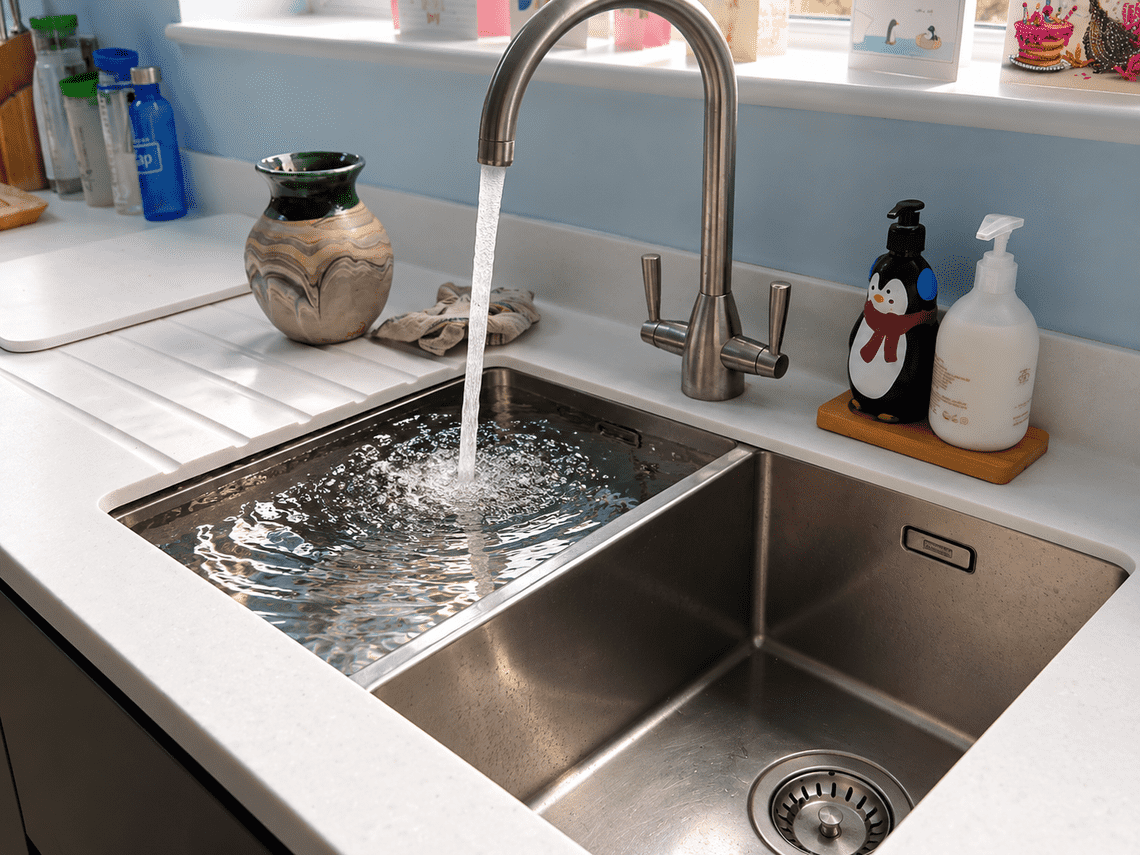
She explained it using the analogy of a sink filling with water.

Different experiences and emotions turn on the taps, gradually filling the sink until there’s no room left.

And when the sink overflows, so do his emotions.

It got me thinking.

We’re not really that different, are we?

How full is your sink? And, perhaps more importantly, do you know how to empty it before it overflows?

What makes your sink fill up?

Imagine that everything you experience adds a little water to your sink.

Some days, there’s barely a trickle.

Other days, the taps seem to be running at full speed.

Work deadlines, family responsibilities, unexpected problems, financial worries, health issues or simply having too many things demanding your attention.

They can all add water to your sink.

And it’s not necessarily one big thing that causes a problem.

Sometimes it’s lots of little things.

An email that needs answering. A phone call that takes longer than expected. Something that doesn’t work the way it should. A change of plans when you’ve already organised your day.

Individually, none of them might be particularly difficult to deal with.

But together?

Drip, drip, drip.

Before you know it, the water is getting dangerously close to the top.

And then something else happens.

Something that, on a different day, you might have dealt with without giving it a second thought.

But today?

Your sink overflows.

How much water can your sink hold?

Here’s something else worth thinking about.

How much capacity has your sink actually got?

Because we’re not all working with the same-sized sink.

Some people seem to have enormous sinks. They can juggle multiple responsibilities, cope with unexpected changes and still have room for more.

Others have smaller sinks.

But there’s something else to consider.

Even your own sink doesn’t necessarily have the same amount of space available every day.

If you’ve slept badly, you’re feeling unwell, you’re in pain or you’ve already had an emotionally demanding week, there might already be water sitting in your sink before the day has even started.

Think about it in business.

You might comfortably manage five tasks on Monday but struggle with three on Thursday.

Does that mean you’ve suddenly become less productive?

Or does it mean that something else has already filled part of your sink?

Knowing how much capacity you’ve got available is far more useful than constantly trying to squeeze more in.

Which taps are running?

Now, imagine your sink has two taps. One hot and one cold.

Different emotions and experiences can turn on either tap.

Sometimes only one is running.

Sometimes they’re both running at once.

Perhaps you’re excited about a new opportunity but also worried about whether you’ve got enough time to deliver it.

Maybe you’re looking forward to an event but feeling anxious about something else that’s happening.

Or perhaps you’re enjoying spending time with friends but you’re already tired from a demanding week.

Emotions don’t necessarily arrive one at a time, neatly waiting for the previous one to disappear.

And here’s something I found particularly interesting.

It’s not only negative emotions that fill your sink.

Excitement, anticipation, celebrations and other positive experiences can all take energy.

You might have had a wonderful day, enjoyed every minute of it and still find yourself feeling completely overwhelmed afterwards.

Because even though the experiences were positive, your sink was still filling.

And when several taps are running at once, the water level can rise surprisingly quickly.

Just because the taps stop doesn’t mean the sink is empty

This is probably the part of the conversation with Leo’s behaviourist that got me thinking the most.

When Leo experiences something stressful, the effects don’t necessarily disappear as soon as the situation is over.

The tap might have stopped running, but there’s still water in his sink.

He needs time for that water level to drop before he’s ready to deal with something else.

And surely the same applies to us?

Think about a particularly demanding day.

You’ve finished work, dealt with whatever needed your attention and finally sat down.

Everything that was causing the stress has stopped.

So why don’t you immediately feel relaxed?

Perhaps because your sink is still full.

You might need time to process what’s happened, recover your energy or simply have a bit of space without anything else being added.

And the time needed won’t necessarily be the same every time.

Sometimes a few minutes might be enough.

Other times, you might need considerably longer.

Removing the thing that filled your sink doesn’t automatically empty it.

It’s worth remembering that when you’re wondering why you can’t immediately move on to the next thing.

So, how do you drain your sink?

This is where I think the analogy becomes particularly useful.

Because preventing your sink from overflowing isn’t necessarily about stopping everything from happening.

It’s about finding ways to let some of the water out.

And what works for one person won’t necessarily work for another.

For me, there are several things that help.

Sometimes it’s colouring. Concentrating on something creative gives my brain a chance to switch away from whatever has been occupying it.

Other times, it’s gardening, going for a walk or spending time with Leo.

And sometimes I need a complete change of environment.

A trip to the pub, different company or simply getting away from my desk can make an enormous difference.

The interesting thing is that the same activity doesn’t necessarily work every time.

Sometimes I want peace and quiet.

Other times, I need conversation and company.

It depends on what’s been filling my sink in the first place.

And that’s the important part.

Finding out what helps you.

Not what someone else thinks should help.

Not what you’ve been told is the best way to relax.

What actually makes a difference to your water level?

Don’t wait until your sink overflows

It’s easy to think we’ll take a break when everything is finished.

When the emails are answered.

When the deadline has passed.

When the house is tidy.

When we’ve caught up with everything.

But how often does everything actually get finished?

There’s usually something else waiting!

If we only allow ourselves time to empty our sinks when they’re already overflowing, we’re making life unnecessarily difficult.

What if we paid attention to the water level throughout the day instead? After all, listening to your body can help you recognise when something needs to change before you reach your limit.

Perhaps you notice that you’re becoming irritated by things that wouldn’t normally bother you.

Maybe you’re struggling to concentrate.

Or you’re finding it difficult to make a decision that would usually be straightforward.

Could those be signs that your sink is getting full?

And could taking ten minutes to do something that helps you be more useful than pushing on until you reach overflowing point?

Of course, we can’t always stop the taps.

Life doesn’t work like that.

There will always be responsibilities, unexpected situations and things that are outside our control.

But perhaps we can get better at recognising when we need to pull the plug and let some water out.

What does this mean for your business?

Running a business involves making decisions, dealing with people, managing expectations and responding to things you can’t always control.

And that’s before you start doing the work you’re actually being paid for!

It’s very easy to focus on how much you need to achieve without considering how much capacity you’ve got available.

But your business doesn’t operate separately from the rest of your life.

Everything shares the same sink.

That difficult conversation at home doesn’t magically disappear when you open your laptop.

Neither does a poor night’s sleep, worrying about someone you care about or recovering from an emotionally demanding experience.

Sometimes the most productive thing you can do is recognise that your sink is getting full and adjust your plans accordingly. That’s why planning for your needs is just as important as planning for your business.

That might mean moving a task, asking for help, taking a break or deciding that something can wait.

It’s not about avoiding responsibilities.

It’s about managing them in a way that works for you.

And sometimes, recognising that you need help is part of finding a way to drain your sink.

How full is your sink today?

So, here’s something I’d like you to think about.

If you could see your emotional sink right now, what would it look like?

Is there plenty of room?

Is the water getting close to the top?

Or has it already started overflowing?

Which taps are running?

And, most importantly, what could you do today to let a little of that water out?

It doesn’t have to be something big.

Sometimes a small change is all that’s needed to create a little breathing space.

And remember, even when the taps have stopped, the water might take a while to drain.

It’s funny how a conversation about helping Leo manage his emotions has made me think more carefully about managing my own.

Because giving yourself your time, your way isn’t just about fitting more into your day.

Sometimes it’s about recognising when you’ve already got enough in your sink.

And giving yourself the time and space to let the water drain.
Self-Employment and the Importance of Planning for Yourself

There’s something I see far too often in self-employment.

Business owners planning around everyone else’s needs first.

Clients first.
Family first.
Messages first.
Other people’s emergencies first.

And somewhere at the bottom of the list?

Themselves.

The problem is, in self-employment, there usually isn’t another person quietly making sure you’re okay behind the scenes.

If you become overwhelmed, exhausted, ill, or completely burnt out, the business feels it too.

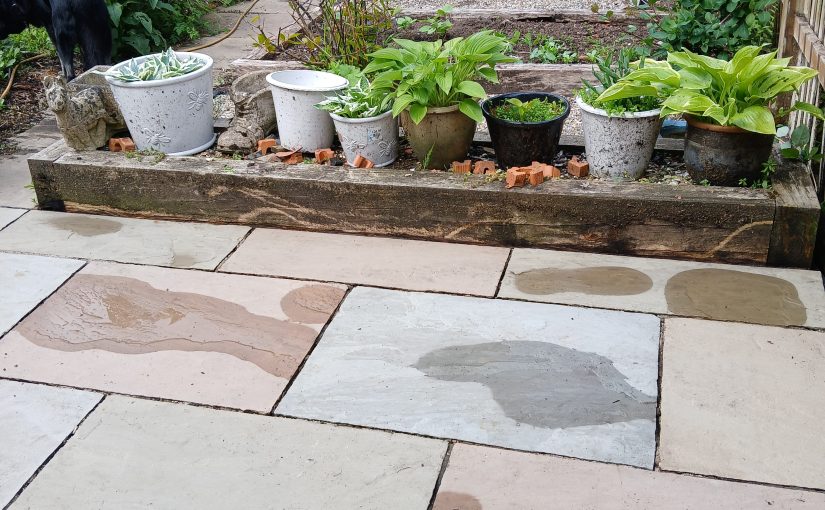
Productive garden with raised beds, plants and growing space representing sustainable growth and planning in self-employment.
Sustainable growth needs planning, space, and care — in business and in life.

That’s why planning for your own needs isn’t selfish. It’s responsible.

You Are the Engine Behind the Business

In employed roles, there are often systems, departments, policies, and colleagues helping carry the weight.

In small business?

A lot of the time, it’s just you.

You are:

  • the planner
  • the decision-maker
  • the customer service department
  • the admin
  • the marketing
  • the problem solver

Which means your wellbeing directly affects your business capacity.

If you constantly ignore your own needs, eventually something gives way.

Your Needs Deserve Space in the Plan

Planning shouldn’t only include:

  • deadlines
  • client work
  • networking
  • meetings
  • social media

It also needs to include:

  • rest
  • processing time
  • switch-off time
  • meals
  • movement
  • recovery
  • realistic workloads

Because a diary full of “productive” tasks means very little if you’re running yourself into the ground trying to complete them all.

Self-Employment Makes This Harder

One of the challenges with self-employment is that there’s rarely a clear stopping point.

There’s always:

  • another email
  • another idea
  • another opportunity
  • another unfinished task

And because of that, many business owners start treating their own needs as optional extras instead of essential maintenance.

But your needs are not the interruption to the business.

Ignoring them usually becomes the interruption later.

Success Becomes Harder Without Capacity

You cannot sustainably grow a business while permanently exhausted.

You cannot make good long-term decisions when your brain is overloaded.

And you certainly cannot support everybody else properly if you never allow yourself any breathing space.

Sometimes the most productive thing you can do is pause long enough to notice what you actually need.

Not what everybody else expects from you.

What you need.

Final Thoughts

Planning for your needs is important because you are not separate from your business.

Your energy matters.
Your capacity matters.
Your wellbeing matters.

And if you don’t make space for those things intentionally, the business will eventually force the issue for you.

A sustainable business is not built by endlessly sacrificing yourself to keep everything moving.

It’s built by creating systems, boundaries, and routines that allow both you and the business to keep functioning long term.

Ready to make your business work your way?

If this article has sparked an idea, highlighted a challenge, or simply made you stop and think, let’s have a chat. I offer a free, no-obligation discovery call where we can explore what’s working well, what’s getting in your way, and whether I can help you save time and create systems that fit the way you work.

👉 Book your free discovery call here: https://tidycal.com/3zd5zj1/blog-discovery-call-clone20250506083047

Listening to Your Body in Self-Employment

There’s a strange badge of honour in self-employment sometimes.

People proudly talk about long hours, skipped lunches, working late into the evening, answering messages at all hours, and “powering through” exhaustion like it’s some kind of business achievement.

But your body keeps score.

Listening to your body in self-employment is one of the most overlooked skills a business owner can develop.

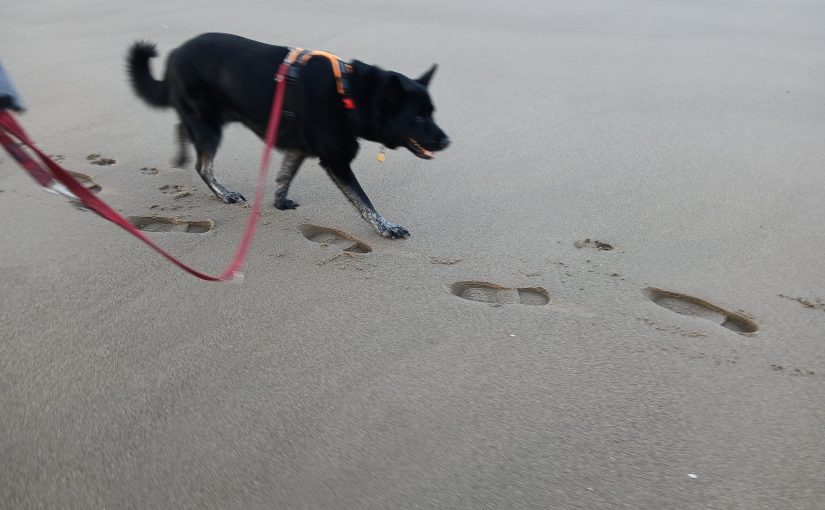
Leo walking on the beach while reflecting on listening to your body in self-employment
Sometimes the most productive thing you can do is step away and breathe.

And eventually, it starts whispering.

Then nudging.

Then shouting.

The problem is that many self-employed people are brilliant at listening to customers, deadlines, family members, networking contacts, business coaches, suppliers, and social media “experts”…

…but absolutely terrible at listening to themselves.

I know because I’ve done it too.

Listening to Your Body in Self-Employment Starts Earlier Than You Think

One of the hardest things about self-employment is that there’s no built-in stop point.

No manager telling you to take annual leave.

No HR department reminding you to log off.

No colleague noticing you’re running on fumes.

When you work for yourself, the responsibility sits with you.

Which sounds empowering… until you realise you can accidentally work yourself into the ground while convincing yourself you’re “just busy.”

Sometimes your body notices long before your brain catches up.

You become snappy.

Your concentration drops.

Simple tasks suddenly feel overwhelming.

You stop sleeping properly.

You feel permanently behind.

Your shoulders ache.

You lose patience.

You reread the same email three times.

And yet somehow, many of us still respond with:

“I just need to push through this week.”

The Danger of Ignoring the Warning Signs

Ignoring your body doesn’t make you stronger.

It usually just delays the crash.

And the frustrating part is that self-employed people are often the worst for this because we care deeply about what we do.

We don’t want to let clients down.

We don’t want to lose momentum.

We don’t want to miss opportunities.

So we keep going.

But there’s a huge difference between being committed to your business and sacrificing yourself for it.

Your business cannot run well if the person running it is exhausted, resentful, overwhelmed, or unwell.

At some point, sustainability matters more than hustle.

Listening Isn’t Laziness

This is the part many people struggle with.

Rest feels uncomfortable.

Slowing down feels guilty.

Taking a proper break can feel “unproductive.”

But listening to your body isn’t laziness.

It’s maintenance.

If your car dashboard lit up with warning lights, you wouldn’t stick tape over them and continue driving across the country pretending nothing was wrong.

Yet many business owners do exactly that with themselves.

Headache? Ignore it.

Exhausted? Another coffee.

Brain fog? Work longer.

Emotionally drained? Push harder.

Eventually your body forces the conversation you were avoiding.

Self-Employment Gives Freedom — But Also Responsibility

One of the reasons many people become self-employed is flexibility.

Freedom.

Choice.

The ability to work in a way that suits them better.

But freedom without self-awareness can become dangerous.

Because when there are no enforced boundaries, you have to build your own.

That might mean:

  • Taking an actual lunch break
  • Finishing work at a sensible time
  • Scheduling recovery time after intense periods
  • Saying no to work that pushes you beyond capacity
  • Working with your energy instead of against it
  • Accepting that productivity changes day to day
  • Building a business that supports your life instead of consuming it

None of these things make you weak.

In fact, they usually make you more effective long term.

Sometimes the Most Productive Thing You Can Do Is Pause

This is something I’ve had to learn repeatedly.

Sometimes the answer isn’t another spreadsheet.

Or another late night.

Or forcing yourself through a task while your brain has completely checked out.

Sometimes the most productive thing you can do is:

  • Go outside
  • Eat properly
  • Sleep
  • Stop staring at the screen
  • Take the dog out
  • Sit quietly for ten minutes
  • Admit you’re overloaded
  • Ask for help

Because clarity rarely appears when you’re running on empty.

Your Business Needs You Functional — Not Burnt Out

A sustainable business isn’t built by permanently ignoring your own needs.

Listening to your body in self-employment isn’t a luxury. It’s part of running a sustainable business.

It’s built by understanding your capacity.

Understanding your energy.

Understanding when you need support.

And understanding that you are not a machine.

Self-employment gives incredible freedom.

But freedom works best when paired with honesty.

Honesty about what’s working.

Honesty about what isn’t.

And honesty about what your body has been trying to tell you for weeks.

Because if you don’t listen early… eventually your body tends to make sure you listen later.

If your business feels heavy right now, it may not mean you’re failing.

You may simply be overloaded.

Sometimes an outside perspective, a structured plan, or a few hours of support can make a huge difference before burnout properly hits.

That’s exactly the kind of support I offer through Focus Guru — helping small business owners regain clarity, capacity, and breathing space before everything becomes overwhelming. Please get in touch and give me 15 mins of your precious time!

The sooner you start listening to your body in self-employment, the easier it becomes to avoid burnout and make better decisions for both yourself and your business.

Ready to make your business work your way?

If this article has sparked an idea, highlighted a challenge, or simply made you stop and think, let’s have a chat. I offer a free, no-obligation discovery call where we can explore what’s working well, what’s getting in your way, and whether I can help you save time and create systems that fit the way you work.

👉 Book your free discovery call here: https://tidycal.com/3zd5zj1/blog-discovery-call-clone20250506083047